

Are you tired of watching competitors dominate local search results? Your Google Business Profile (GBP) might be the missing piece. In 2026, GBP is not just a free listing anymore. It is your digital storefront, your local SEO engine, and your AI-powered lead machine. Miss it, and you hand customers straight to your rivals.
At 4P Wisdom, we help businesses in Pakistan and globally turn underperforming GBP listings into local lead magnets. This complete checklist covers every critical step. Follow it carefully, and watch your local visibility soar.
What Is Google Business Profile and Why Does It Matter in 2026?
Google Business Profile is a free tool from Google. It lets businesses manage how they appear on Google Search and Google Maps. Think of it as your business card on the world’s biggest search engine.
In 2026, GBP functions as an AI-powered marketing hub. It shapes how customers find, evaluate, and choose your business. With Gemini-powered Ask Maps and AI Overviews, a well-optimized profile directly determines your local search visibility.
Profiles that are completely filled out receive 70% more visits. They also appear 18 times more often in search results than incomplete ones.
If you are a local business owner, a digital marketing agency, or an SEO professional, this checklist is for you. Let us dive in step by step.
Step 1: Claim and Verify Your Google Business Profile
This is where everything starts. You cannot optimize what you do not own.
Go to business.google.com and search for your business. Claim the listing if it already exists. If not, create a new one from scratch.
Unverified profiles simply cannot rank in the Local Pack. Verification opens the door to every other optimization on this checklist. In 2026, you can verify through mail, phone, email, or video.
Video verification is now the default for new listings in most regions. Record a single continuous take that shows signage, interior, and a live management action to pass the first time.
Pro tip: Use a business email connected to your domain for verification. It signals professionalism and builds entity trust with Google.
Step 2: Get Your Business Name Right (No Keyword Stuffing)
Your business name on GBP must match your real-world branding exactly. This is non-negotiable in 2026.
Your business name must match real-world signage and legal documents exactly. Google now suspends profiles that stuff keywords into their business name. “Joe’s Plumbing” should never become “Joe’s Plumbing | Best Emergency Plumber Near Me.”
Keep it clean. Keep it consistent. Use the same name across your website, social media, local directories, and invoices.
Step 3: Nail Your NAP Consistency Across All Platforms
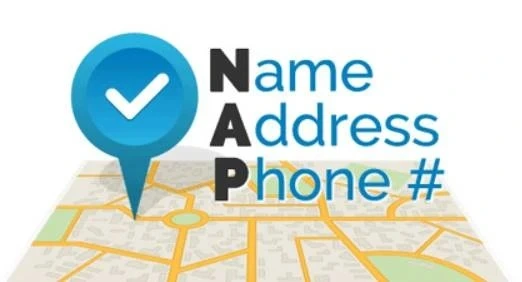
NAP stands for Name, Address, and Phone Number. Consistency here is a foundational local SEO signal.
NAP consistency across every platform matters enormously. Mismatched data between your GBP, website, Yelp, and local directories confuses Google’s algorithms and damages rankings.
Audit your NAP on platforms like Yelp, Facebook, Yellow Pages, and local Pakistani business directories. Even a tiny difference in your address format can confuse Google’s algorithm. Fix every inconsistency before moving forward.
Step 4: Choose the Right Business Categories
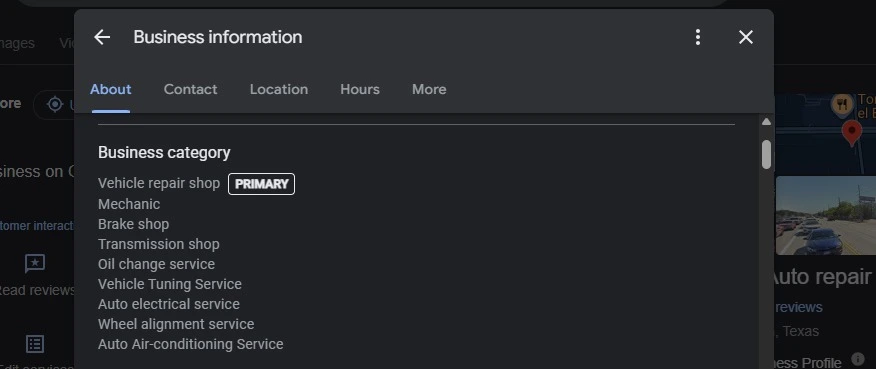
Category selection is arguably the most powerful ranking decision you will make. Get this right and everything else becomes easier.
Your primary category carries more weight than almost any other ranking factor in local search. It dictates whether you show up in the map pack results when someone searches for your type of business.
Switching a law firm from “Law Firm” to “Personal Injury Attorney” can change Maps visibility more than any other on-profile edit. Choose the narrowest, most accurate category. Add secondary categories too. They help you appear for additional search queries.
A bakery that also serves coffee should add “Coffee Shop” as a secondary category to appear in both sets of results. Audit competitor profiles and use Google’s autocomplete suggestions to spot categories that align with how people actually search in 2026.
According to Google’s own data, there are now over 4,100 business categories available. Stay updated as Google frequently adds new ones.
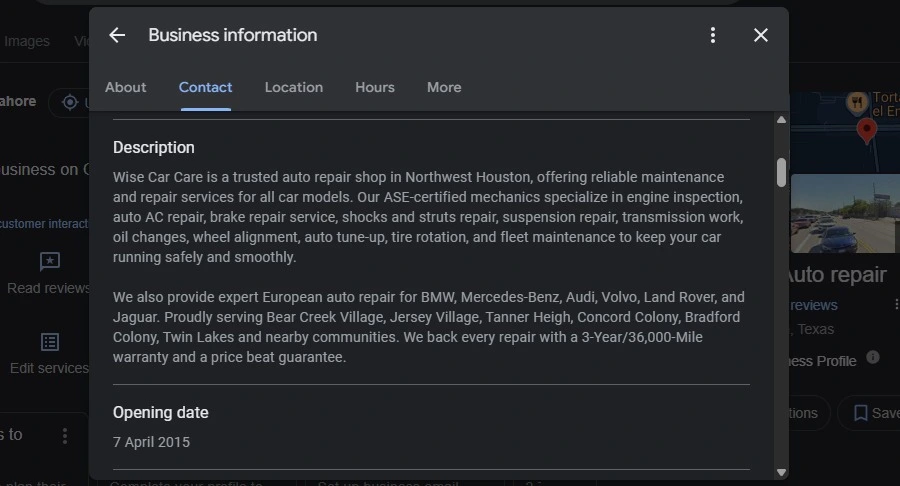
Step 5: Write a Compelling Business Description
You have 750 characters to convince a potential customer to choose you. Every word must work hard.
Include your core services, your location, your unique value proposition, and trust signals. Write naturally. Mention the areas you serve. Avoid keyword stuffing, but do use relevant terms your customers actually search for.
Here is the difference between weak and strong descriptions:
Weak: “We are a digital marketing company. Call us today.”
Strong: “4P Wisdom is a results-driven digital marketing agency helping businesses in Katy. We specialise in local SEO, social media marketing, Google Ads, and web design backed by real data and transparent reporting.”
Specific details build authenticity aligned with EEAT principles. Mentions of accessibility, parking, and hours answer unspoken customer questions while avoiding subjective claims that violate Google guidelines.
Step 6: Set Up Your Service Area and Physical Address
If you serve customers at their location, set a service area in your GBP. Be realistic, not greedy.
Service areas should be set realistically, not aggressively. Avoid virtual offices or mailbox addresses. Your service radius should reflect actual business operations.
If you have a physical location, make sure your address is pinned correctly on Google Maps. Walk outside and check it yourself. One incorrect pin can send customers to the wrong street.
Step 7: Add Your Business Hours (And Keep Them Updated)
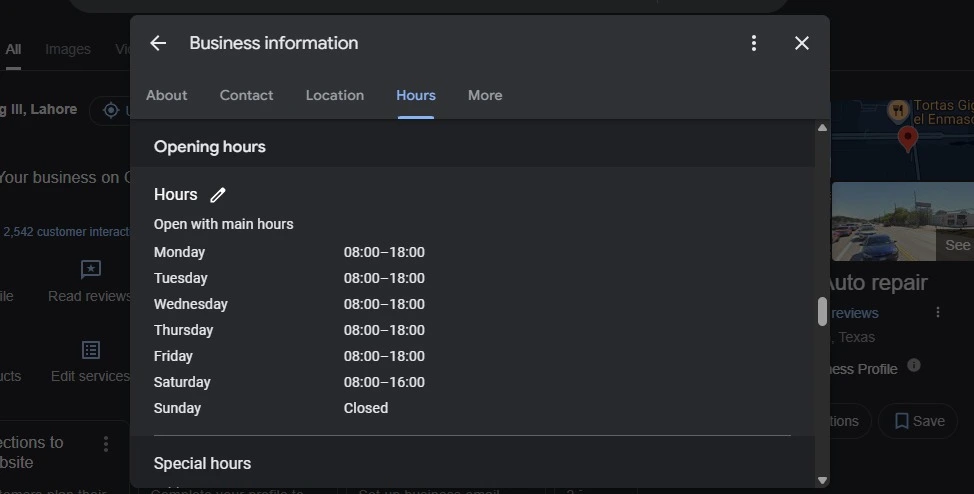
Wrong business hours are one of the most damaging things on a GBP listing. Nothing frustrates a potential customer more than arriving at a closed business.
Showing up at a closed business ruins trust instantly. Inaccurate hours rank among the top causes of negative reviews for local businesses. Google uses hours of data to decide when your profile appears in real-time search results.
In 2026, businesses maintaining consistently accurate hours receive priority in AI-driven local search features. Set calendar reminders two weeks before major holidays to update special hours proactively.
Add special hours for Eid, public holidays, and seasonal closures in advance. Do not wait until customers complain.
Step 8: Add All Your Products and Services
Many business owners skip this step entirely. That is a big mistake.
The product and offer catalogues have become materially more important in 2026. Google Maps now pulls products into its AI answers.
List every service you offer with detailed descriptions. Include pricing if possible. Use language your customers actually use when searching. For example, instead of just writing “SEO,” write “Local SEO for small businesses in Lahore.”
Google now cross-references your website’s service descriptions with your GBP Services tab to verify your expertise. This alignment between your website and GBP is a strong trust signal in 2026.
Step 9: Upload High-Quality Photos Consistently
Photos are not just decorative in 2026. They are trust signals and ranking assets.
Profiles with richer media get more views, more calls, and more direction requests. Google’s own documentation cites roughly 42% more requests for directions and 35% more website clicks on profiles with photos than those without.
Google’s Vision AI now scans the content of your photos to understand your expertise. A plumber who uploads a high-resolution photo of a tankless water heater installation is more likely to rank for “water heater repair” even without that keyword in text.
Here is what to upload:
Upload real photos of your team at work. Upload interior and exterior shots of your premises. Upload photos of your products, services, and completed projects. Add before-and-after shots where relevant. Upload a 360-degree virtual tour if your business has a physical location.
Never use stock images. Google and customers both see through them. Real photos build real trust.
The single wide image that anchors the profile header should be 1,080 x 608 pixels minimum with a 16:9 ratio. Pick something evocative and branded, not a generic stock shot.
Step 10: Post Weekly on Google Business Profile
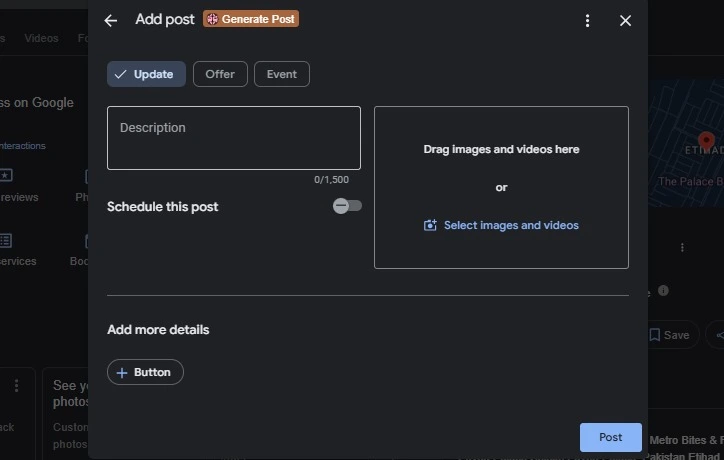
Google Posts are one of the most underused features in local SEO. Businesses that post consistently gain a clear competitive edge.
Posts are engagement signals. Publishing weekly Posts, Events, and Offers lifts click-through in the local panel. Treat Posts as conversion assets.
A business that posts weekly stands out visually in the 3-Pack compared to a competitor whose last post is six months old. The activity signal of regular posting contributes to Google’s assessment of business prominence.
Here are the best post types to use:
What’s New posts work for general updates and tips. Share recent work, team news, or service reminders. Offer posts work brilliantly for promotions and seasonal deals. They display a special badge in the local pack. Event posts work for webinars, workshops, or community events. They stay active for the duration of the event.
Every post should have a clear call-to-action. Every post should include a relevant photo. Write in natural, conversational language. AI search systems love posts that sound human.
Step 11: Build a Solid Review Strategy
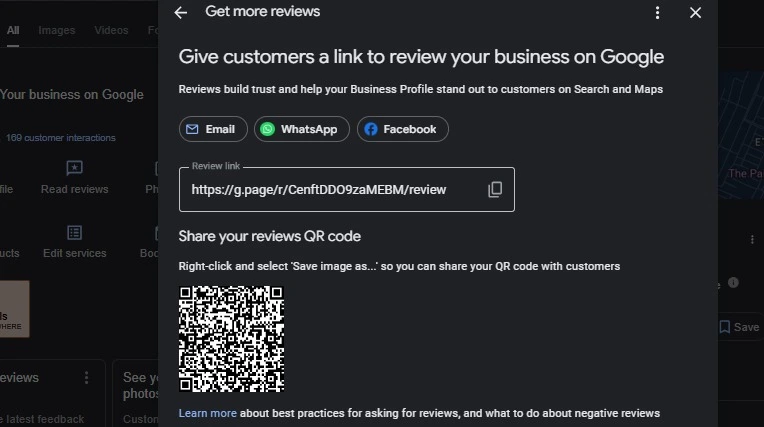
Reviews are one of the most powerful local ranking factors in existence. In 2026, they are even more critical because AI systems use them as the primary source of truth.
Guide your customers to leave detailed reviews mentioning specific amenities and service outcomes so the AI can use those facts to answer future queries.
Review velocity beats review count. A steady flow of reviews over 90 days ranks better than a sudden burst of 50 followed by silence.
Here is how to get more reviews ethically:
Ask happy customers immediately after a positive experience. Send a follow-up message with a direct link to your GBP review page. Train your team to request reviews as part of the customer journey. Respond to every single review, positive or negative.
Detailed replies with local references or product mentions help reinforce relevance and show Google your business is engaged and trustworthy.
Responding to negative reviews professionally is just as important. A thoughtful response to a bad review can win back the customer and impress future ones.
Step 12: Use the Q&A Section Strategically
The Q&A section is a hidden gem that most businesses completely ignore. Do not make that mistake.
Google’s Q&A feature is more powerful in 2026, often influencing what searchers see before clicking through. Seed your Q&A with real questions and detailed, helpful answers using actual customer language.
Anyone with a Google account can ask and answer questions about your business. Left unmanaged, competitors can answer questions inaccurately, and well-meaning customers can provide outdated or wrong information.
Add at least 10 to 15 frequently asked questions yourself. Answer them clearly and completely. Use service names and location keywords naturally. Upvote your own answers to push them to the top. Check the section weekly and respond to new questions promptly.
Step 13: Enable Google Messaging
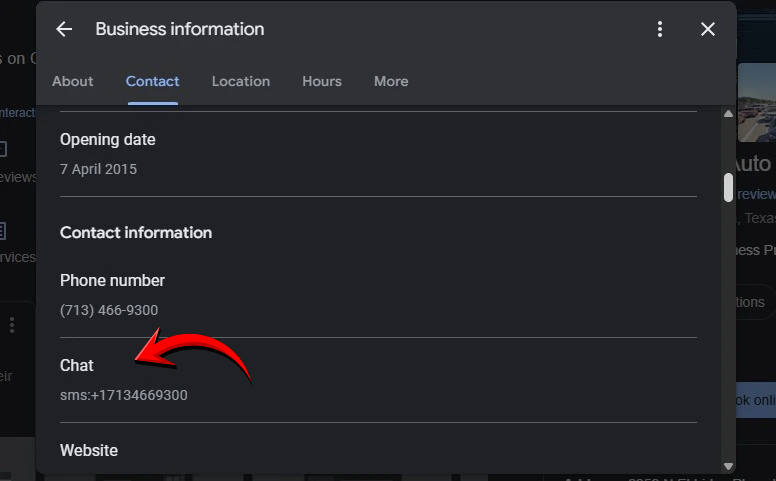
Customers increasingly prefer texting a business over calling. Enable GBP messaging and respond quickly.
Google now monitors response times, which can affect rankings and engagement rates. Many customers prefer texting businesses over making phone calls. Enable messaging, set up quick response templates, and assign someone to reply promptly.
Set up automated welcome messages so no customer inquiry goes unacknowledged. Assign a team member to manage messages during business hours. Aim to respond within one hour wherever possible.
Step 14: Optimise Your Website to Support Your GBP
Your website and GBP must work together as a team. The disconnect between the two weakens both.
Google now cross-references your website’s service descriptions with your GBP Services tab to verify your expertise. On-page local optimisation is one of the three biggest ranking factors alongside GBP and reviews.
Make sure your website has dedicated service pages that match what is listed on your GBP. Add an embedded Google Map on your contact page. Display your NAP clearly in the footer of every page. Create location-specific landing pages if you serve multiple cities.
If you need help building an SEO-optimised website that supports your local GBP rankings, explore the digital marketing services at 4P Wisdom. We build websites specifically designed to amplify local SEO performance.
Step 15: Track Your GBP Performance with Insights
Data is your best friend. Use GBP Insights to understand what is working and what needs improvement.
GBP provides free analytics showing exactly how customers find and interact with your listing. Track search queries that brought users to your profile, photo views, direction requests, website clicks, and call clicks. These indicate purchase intent.
The revamped GBP Insights dashboard in 2026 offers advanced analytics, including heatmaps and conversion tracking. Use these insights to refine your content, categories, and photo strategy over time.
Set a monthly reminder to review your GBP analytics. Compare your performance quarter over quarter. Identify which services are driving the most search impressions and double down on those.
Step 16: Build Local Citations and Directory Listings
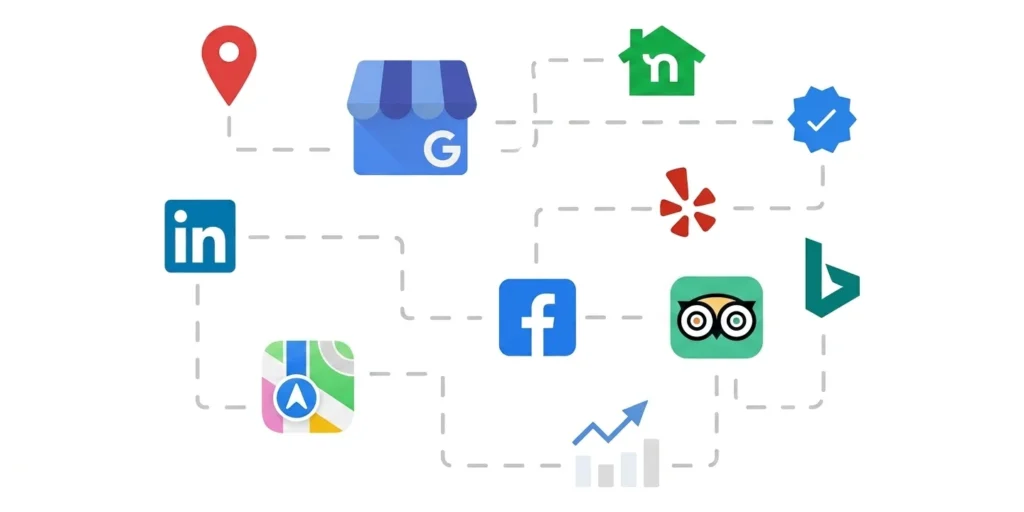
Citations are online mentions of your business name, address, and phone number. They reinforce your local authority.
Submit your business to local directories. Make sure your NAP is consistent everywhere. Focus on high-authority platforms like Yelp, Bing Places, Apple Maps, Facebook, and local Pakistani business directories.
Mentions matter as much as links in 2026. AI systems favour businesses that look real, active, and consistently referenced across the web.
For a deeper look at building local authority through citations and links, check out resources from Moz’s Local SEO Guide and BrightLocal’s Local SEO Learning Hub, which are trusted references in the digital marketing community.
Step 17: Embrace AI and Generative Engine Optimisation (GEO)
This is the big one that most businesses are missing in 2026. Google’s AI is now surfacing businesses in AI Overviews and Gemini-powered answers. You need to optimize for this new reality.
To win in the Answer Engine era, you must move from traditional SEO to Generative Engine Optimization. Your goal is to provide the AI with the best possible source material about your business.
Use the Services section to write short, declarative sentences about what you do. This chunked information is much easier for Google’s AI to parse and repeat to users.
Make sure your business entity is clearly defined everywhere online. Use consistent language across your GBP, website, social media profiles, and press mentions. The more consistently you describe your business, the more confidently AI systems will recommend you.
Step 18: Create an Ongoing GBP Maintenance Schedule
Optimization is not a one-time project. It is an ongoing commitment. Set a clear schedule and stick to it.
Weekly tasks: Post one new update with a photo and a call-to-action. Respond to all new reviews. Check and reply to Q&A questions. Monitor and respond to messages.
Monthly tasks: Upload new photos from recent projects or team activities. Review GBP Insights data. Audit your services and make updates. Check NAP consistency across all directories.
Quarterly tasks: Compare your profile against top competitors. Audit your business categories. Review and update your business description. Check for any new GBP features to enable.
Ongoing optimisation through updates, fresh content, review management, and service refinement signals continued activity. Small, consistent improvements outperform occasional large changes and help sustain Map Pack visibility.
According to recent analysis, Google’s algorithm has a faster decay rate in 2026. Businesses that had not posted an update or photo in over 30 days experienced dramatic drops in GBP impressions.
Conclusion
Think of your GBP as your 24-hour digital salesperson. It works while you sleep, answers customer questions, showcases your services, and builds your reputation. The businesses that treat it as a living, breathing asset dominate local search. The ones that ignore it disappear.
Use this checklist as your roadmap. Bookmark it. Share it with your team. Come back to it every quarter.
At 4P Wisdom, we live and breathe local SEO and digital marketing strategy. If you want expert help optimising your Google Business Profile or building a complete local SEO strategy, our team is ready to help your business grow.
Ready to dominate local search? Contact 4P Wisdom today and let us build a Google Business Profile strategy that drives real results for your business.