

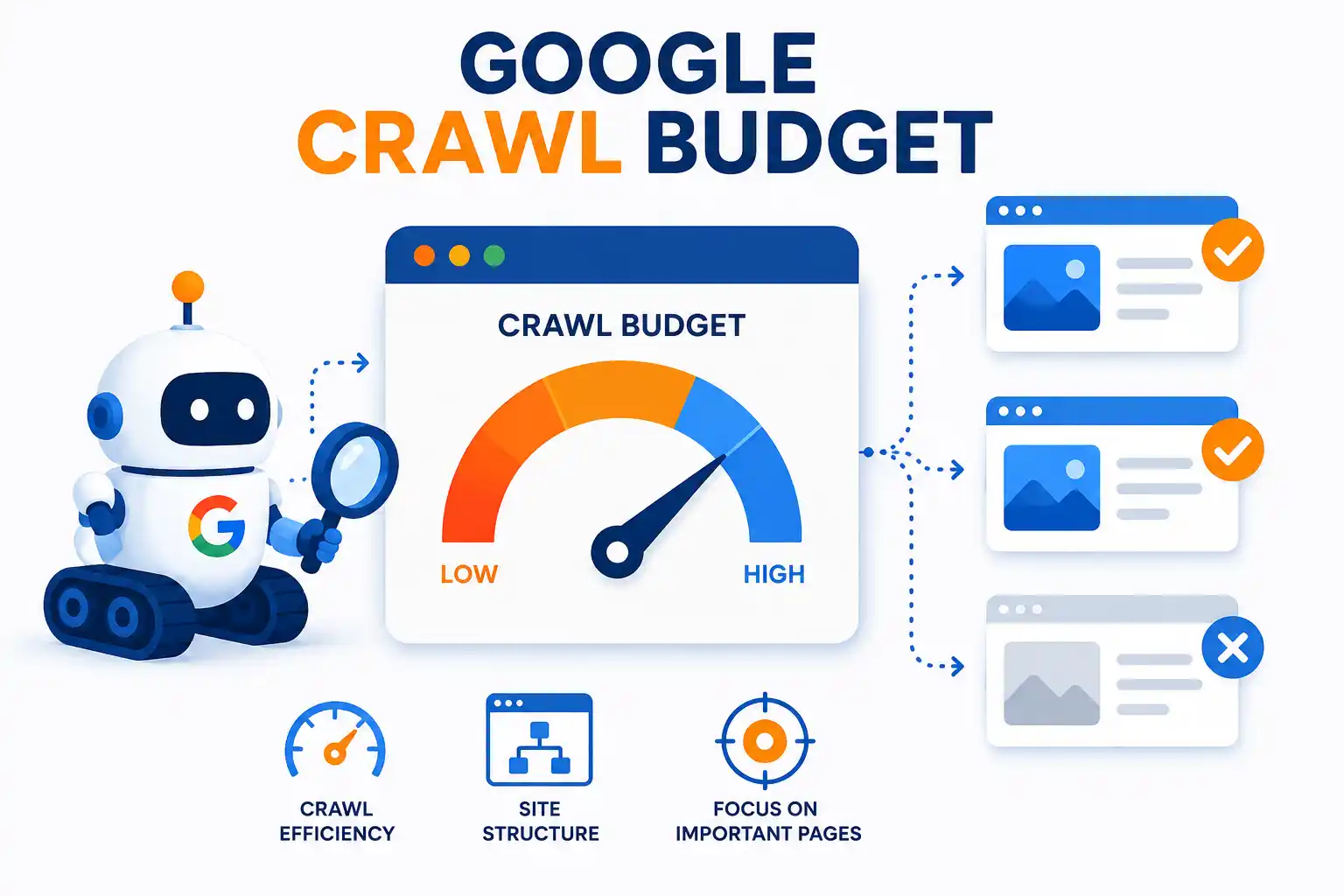
Google has updated its official crawl budget documentation with new guidance that could help large websites improve crawling efficiency. One of the biggest takeaways is Google’s recommendation to use the HTTP 304 Not Modified status code for pages that haven’t changed since the last crawl. This simple server response can reduce unnecessary crawling, save server resources, and help Googlebot focus on discovering and indexing fresh content.
Although the updated documentation is primarily intended for enterprise websites with more than one million pages and medium-sized sites containing over 10,000 frequently updated pages, the recommendations provide valuable insights for anyone interested in technical SEO and website performance.
Google Explains How Crawl Capacity Is Shared
One of the most notable additions to Google’s documentation is a clarification about how its crawlers use a website’s crawl capacity.
Google explains that while different crawlers have different purposes and levels of demand, they all share the same crawl capacity limit for a website. In other words, Google’s various bots don’t have separate crawl budgets. Instead, they draw from the same pool of available resources.
For example, if Googlebot is crawling your web pages while Googlebot-Image is simultaneously scanning your images, both crawlers are using the same crawl capacity. If one crawler becomes highly active, it can reduce the resources available for the others.
This is an important clarification because many website owners assume each Google crawler operates independently. Google’s latest guidance makes it clear that heavy crawling by one bot can affect how efficiently other Google crawlers access your site.
Why Crawl Budget Matters
Crawl budget refers to the number of pages Google is willing and able to crawl on your website during a given period. For smaller websites, crawl budget is rarely an issue because Google can easily crawl all available pages.
However, for large websites with thousands—or even millions—of URLs, crawl budget becomes much more important. If Google spends time repeatedly crawling pages that haven’t changed, it may delay the discovery or indexing of newly published or updated content.
That’s why optimizing crawl efficiency can improve how quickly important pages appear in Google’s search index.
Google Recommends Using HTTP 304 Responses
Another major update to Google’s documentation is its recommendation to support HTTP 304 Not Modified status codes.
When a page hasn’t changed since Google’s last visit, returning a 304 Not Modified response tells Googlebot that it doesn’t need to download the page again. Instead, Google can continue using the cached version it already has.
This reduces unnecessary data transfers and saves valuable server resources.
Google’s documentation explains that if a page hasn’t changed since it was last crawled, returning a 304 response allows Google to reuse its cached copy instead of requesting the full page again. As a result, your server uses less bandwidth while Googlebot can spend more time crawling pages that actually contain new or updated content.
What Is a 304 Not Modified Status Code?
The HTTP 304 status code is part of the 3xx family of HTTP response codes. Although this category is technically known as “redirection,” a 304 response doesn’t actually redirect visitors or search engine bots to another page.
Instead, it simply tells the browser or crawler that the requested resource hasn’t changed since the previous request.
According to web standards, this allows the cached version of the page to be used without downloading the full content again.
For Googlebot, this means fewer unnecessary requests and more efficient crawling.
Benefits of Returning 304 Responses
Implementing 304 responses correctly offers several advantages for both website owners and search engines.
Some of the key benefits include:
- Reduces unnecessary server load.
- Saves bandwidth by avoiding repeated downloads of unchanged pages.
- Helps Googlebot crawl websites more efficiently.
- Allows crawlers to focus on newly published or updated pages.
- Improves overall resource management for large websites.
While these improvements may not have a noticeable impact on small websites, they can make a significant difference for websites with massive content libraries or rapidly changing inventories.
Who Should Pay Attention?
Google notes that its crawl budget guidance is mainly intended for:
- Enterprise websites with over one million pages.
- Medium-sized websites with more than 10,000 pages that update frequently.
- Large ecommerce stores.
- News publishers.
- Online marketplaces.
- Directory and listing websites.
For smaller blogs or business websites with only a few hundred pages, crawl budget optimization is generally not a major concern. Google is usually able to crawl those sites without any issues.
Still, understanding how Googlebot works can help site owners build more technically optimized websites as they continue to grow.
More Than Just Two Updates
While the two biggest additions involve shared crawl capacity and HTTP 304 responses, Google also made several smaller revisions throughout the documentation.
These edits mainly improve the clarity and precision of Google’s explanations rather than introducing major new recommendations. The goal is to help developers and SEO professionals better understand how Google’s crawling systems operate.
Final Thoughts
Google’s latest crawl budget documentation reinforces the importance of efficient crawling, especially for large and frequently updated websites. The recommendation to support HTTP 304 Not Modified responses is a practical way to reduce server usage while helping Googlebot spend its crawl budget more effectively.
The clarification that all Google crawlers share the same crawl capacity is equally valuable. It reminds website owners that every crawler contributes to overall crawl activity, making efficient server responses even more important.
For enterprise websites and large publishers, implementing proper HTTP caching and 304 responses can improve crawl efficiency without requiring major infrastructure changes. While smaller websites may not experience dramatic benefits, following Google’s best practices can help ensure search engines crawl content as efficiently as possible as a site grows.
Read our detailed guide on what crawl budget is and how to optimize it for better SEO performance.