

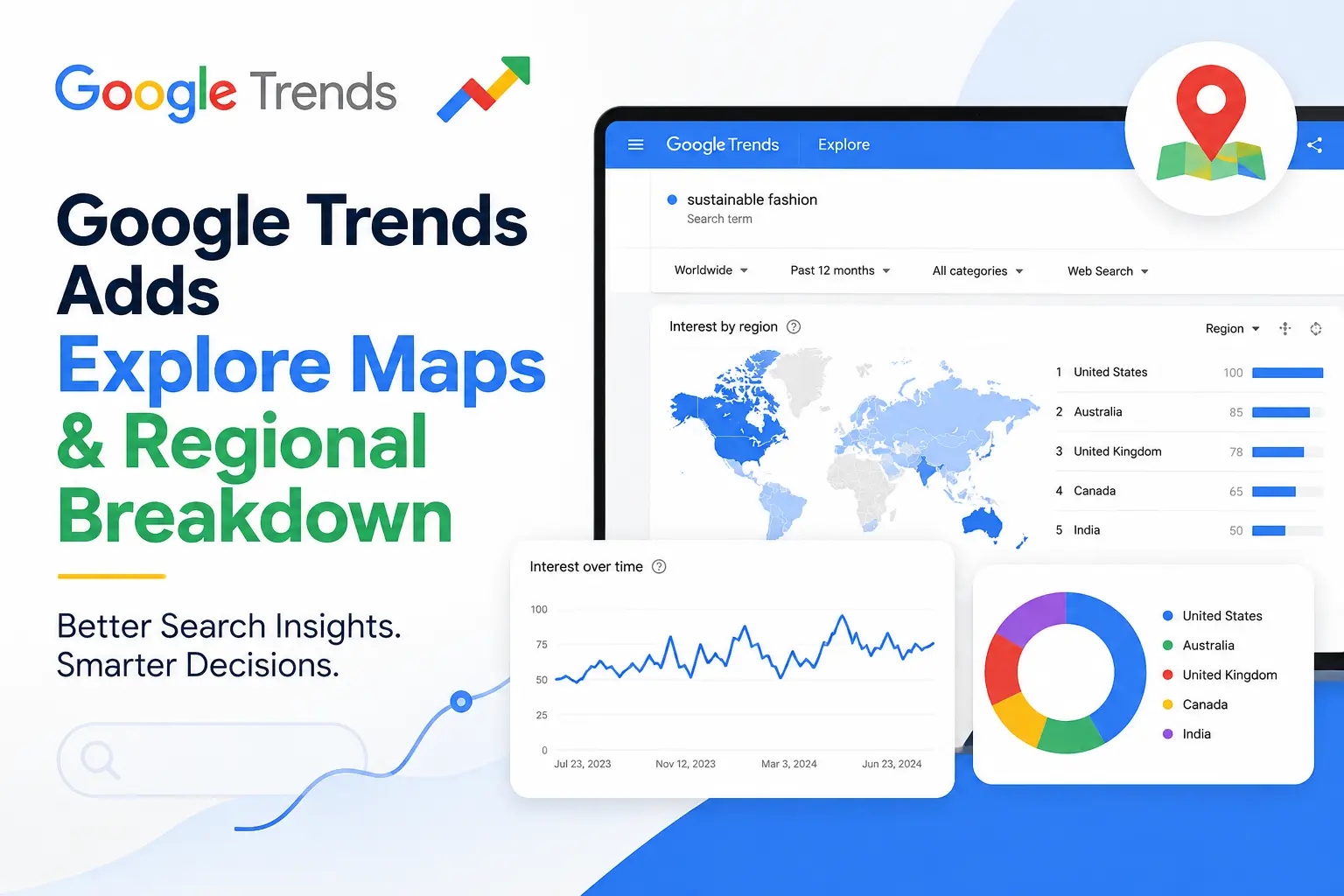
Google Trends has received a useful update that makes regional search data much easier to explore. Google has added two new features called Explore Maps and Regional Breakdown. The new features give users a clearer visual picture of where search interest is coming from.
Google announced the update on August 19, 2026. The company said the new interactive maps were designed to make data storytelling clearer and help users quickly spot regional trends.
You can check out the latest experience on the Google Trends Explore page.
What Are the New Explore Maps?
Google Trends has provided regional search data for a long time, but the new maps make that information more visual and easier to understand. Users can search for a topic, keyword, or product and then explore its popularity across different regions. The map makes it much easier to notice areas where interest is particularly strong.
This can be especially helpful when a topic is popular in one location but receives less attention elsewhere. Instead of going through a long list of numbers, users can get a quick visual overview. Google says the goal is to help users “instantly spot regional trends” and capture useful visual insights for their audiences.
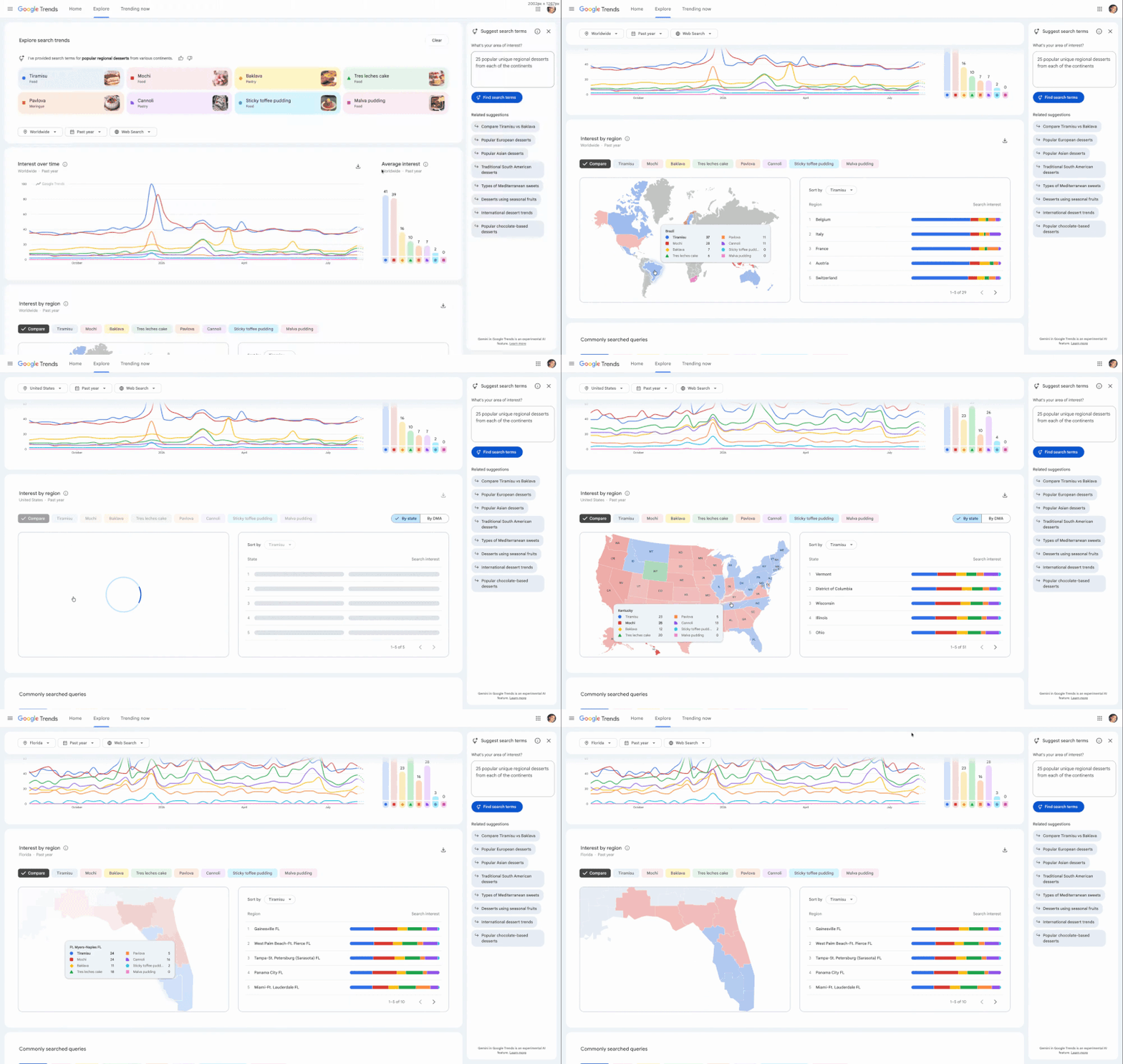
Regional Breakdown Adds More Detail
The Regional Breakdown feature gives users another way to understand search interest by location. It is important to remember that Google Trends measures relative search interest, rather than showing the exact number of searches.
For example, a region with a high Trends score does not necessarily have more total searches than a larger region. The score shows how popular a search term is compared with other searches in that location.
Google explains how this data works in its Google Trends help documentation.
The new interface should make these regional patterns easier to explore without requiring users to spend as much time studying the data.
Why This Matters for SEO
The update could be particularly useful for SEO professionals and digital marketers.
When researching a keyword, it is useful to know not only how popular it is but also where people are searching for it. Regional data can help marketers understand which markets are showing stronger interest.
For example, a business selling a product across several regions may discover that searches are much higher in certain areas. That insight could help the company focus its advertising, content, or local SEO efforts.
Marketers can also use the information when creating location-specific landing pages or planning campaigns for different markets.
A Useful Tool for Content Creators
Content creators can also get more value from Google Trends with the new features. Imagine that a creator discovers a topic that is suddenly gaining search interest. The next question might be where that interest is coming from.
The new maps can help answer that question.
A travel publisher, for example, could discover that searches for a particular destination are especially strong in certain regions. That could help the publisher decide which audiences to target with new articles, videos, or guides.
The same approach can work for news publishers, bloggers, YouTubers, and businesses looking for new content ideas.
Making Search Data Easier to Understand
One of the biggest advantages of the update is the visual presentation. Search data can be difficult to explain when it is presented only through tables and numbers. Interactive maps can make those patterns much easier to recognize.
This could be useful when marketers are preparing reports or presenting research to clients. A visual map can show regional differences quickly without requiring the audience to study a large amount of data. It also makes Google Trends more useful for people who want to turn search data into a simple story.
Google Trends Continues to Evolve
Google Trends has grown into a useful research platform for marketers, publishers, and businesses. Users can compare search terms, track changes in interest, explore seasonal trends, and research topics across different locations.
Google also offers Trending Now, which focuses on searches that are currently gaining attention across countries and regions. The new maps add another layer to that experience by putting more focus on the geographic side of search behavior.
The New Features May Still Be Rolling Out
The updated features may not be available to everyone yet. Google often rolls out changes gradually, so some users may see the new maps while others may still have the older interface. If the features are not showing up for you, it may simply be a matter of waiting for the rollout to reach your account or region. The original report also noted that the new experience might not yet be fully live for all users.
What Marketers Can Learn From the Update
The new features could be valuable for both local and international marketing. Businesses can use regional search interest to find markets where people are already showing interest in a particular topic or product. This information can then be combined with other research when planning campaigns or entering new markets.
Of course, Google Trends should not be treated as a complete market research tool. Search interest alone does not tell you everything about demand, sales, or customer behavior. Still, it can provide a useful early signal and help businesses decide where to look more closely.
Final Thoughts
Google’s new Explore Maps and Regional Breakdown features are a welcome improvement to Google Trends. The update does not completely change the platform, but it makes one of its most useful data points easier to explore.
The biggest benefit is that users can now get a clearer picture of where search interest is coming from. For SEO professionals, marketers, publishers, and content creators, that extra context can make search data much more useful.
The rollout is still underway, so the new features may not appear for everyone immediately. If you use Google Trends regularly, it is worth checking the Explore section and seeing what the new regional maps can show you.