

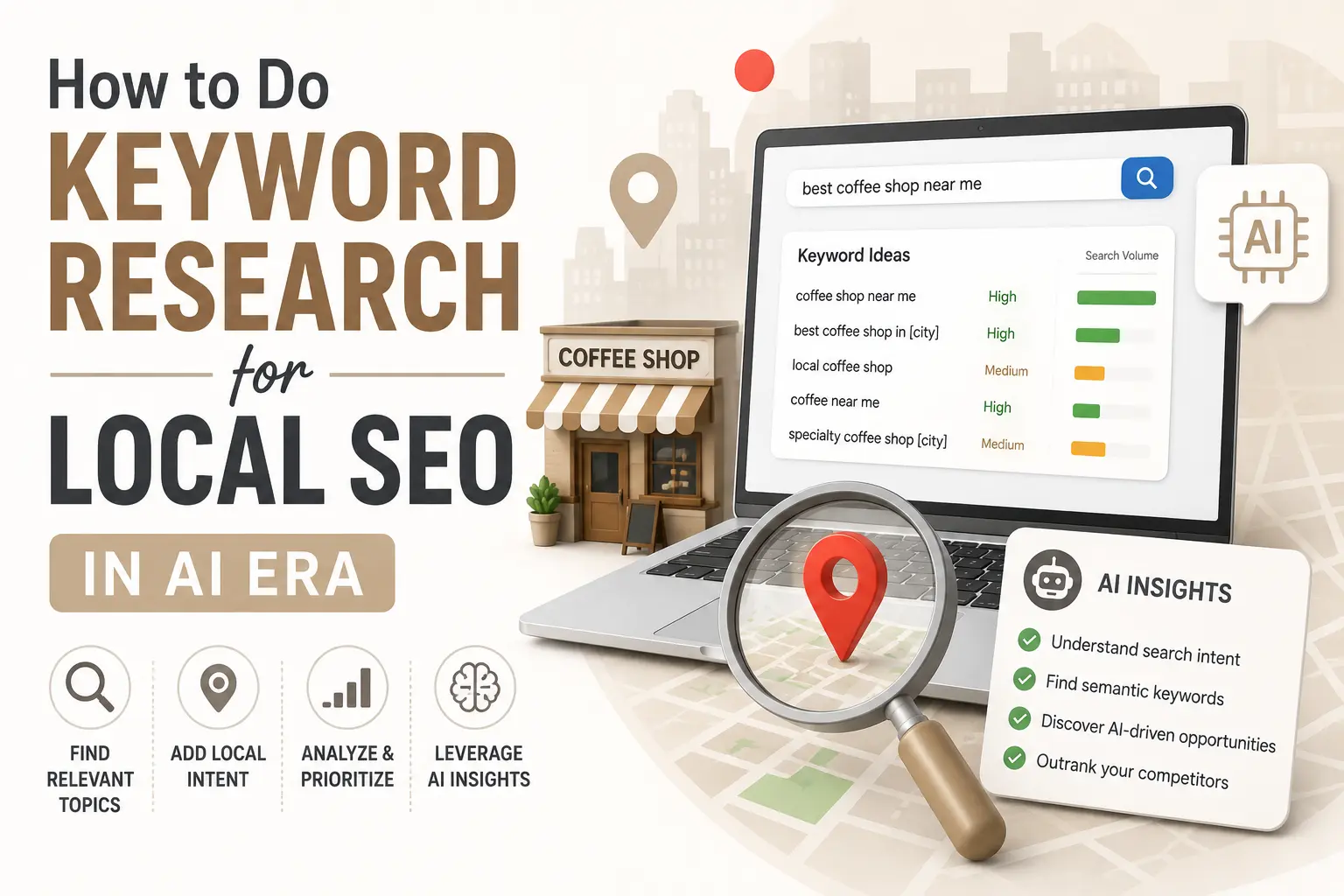
How to Do Keyword Research for Local SEO in the AI Era
Let me ask you something, honestly. Are you showing up when people nearby search for your business? If not, your keyword strategy might be stuck in 2019. Local SEO keyword research has changed dramatically. AI-powered search has rewritten the rules completely. And if you are still doing keyword research the old way, you are leaving serious money on the table.
This guide is your complete roadmap for local keyword research in the AI era. Whether you are a small business owner, a local marketer, or a growing brand in Texas, this guide is built for you. We will cover everything from location-specific keywords to near-me searches to AI-era tactics that most competitors are completely missing.
Let us get into it.
Why Local SEO Keyword Research Is Different in 2026
Local keyword research is not the same as general SEO keyword research. It never was. But in 2026, the gap between the two has grown even wider.
Nearly 60% of searches now result in zero clicks because users never leave the search page. AI-generated results now take up a large portion of that page. This means your keywords need to work harder than ever. They need to earn visibility in Google Maps, the Local Pack, AI Overviews, and organic results simultaneously.
Over 50% of consumers use search engines to find local businesses. Around 76% of people who search for something nearby visit a business within one day. Think about that for a moment. Three out of four people who search locally show up in person within 24 hours. These are not casual browsers. These are ready-to-buy customers. And the only way to capture them is through smart, well-researched local marketing keywords.
Google’s local pack now appears on over 46% of all Google searches. For businesses serving specific geographic areas, local SEO is the highest-ROI organic channel available.
At 4P Wisdom, we see this play out with our clients every single day. If you want us to build a complete local keyword strategy for your business, explore our SEO services today.
What Are Location-Specific Keywords?
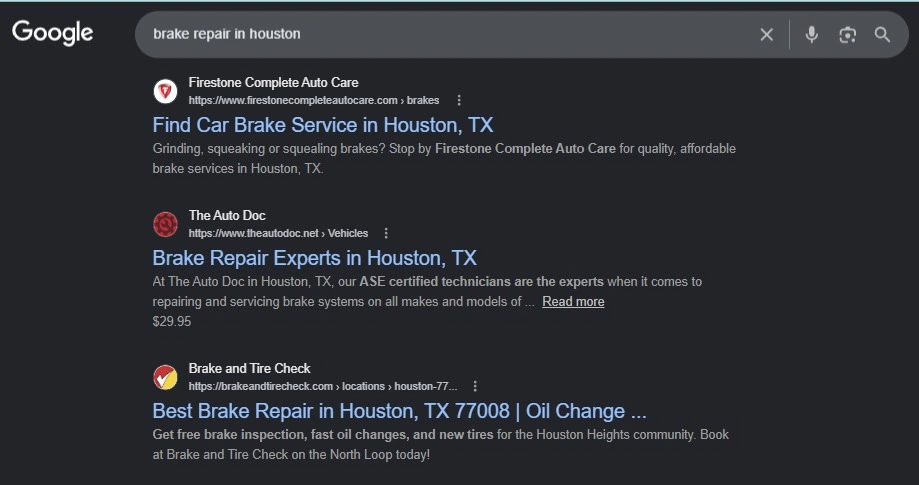
Before we jump into the process, let us get the fundamentals right. What exactly are location-specific keywords?
A location-specific keyword is a search phrase that includes a geographic qualifier. It tells Google where the searcher is looking for a service or product.
Here are some simple examples. “Digital marketing agency in Austin” is a location-specific keyword. “Best SEO company in Dallas” is another strong one. “Plumber near me in Houston” is a classic version that combines service, location, and user proximity all in one phrase.
A local keyword is a search term that includes specific geographic qualifiers, such as a city, neighborhood, or region. For instance, “Italian restaurant in San Antonio” is a local keyword, whereas “Italian restaurant” is a general keyword.
These keywords are the lifeblood of any local SEO campaign. Without them, you are competing with the entire world. With them, you are competing only for customers in your backyard who are ready to act today.
The New Reality of Local Search in the AI Era
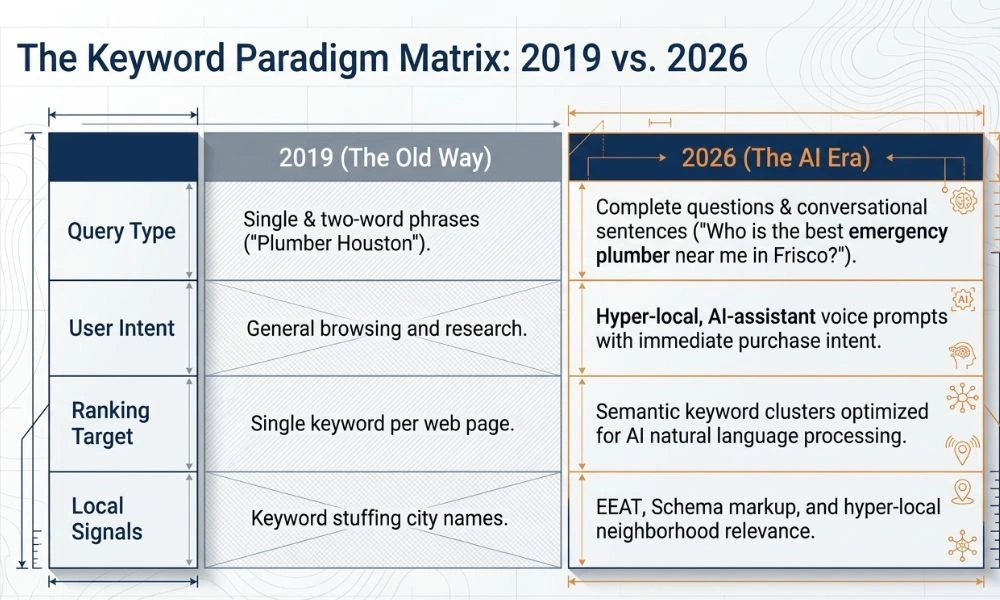
Here is where it gets exciting. And a little bit challenging.
There are now fewer direct queries like “pizza” and more question-based queries such as “what kind of pizza is near me?” People are leaving the old standard of Google search behind and using AI programs to ask questions instead. This shift is massive. It means your keyword strategy must go beyond single-word and two-word phrases. You need to think in complete questions and conversational sentences.
Keyword research is still absolutely relevant in the AI era. You need to build targeted lists of both traditional search and conversational AI search keywords. This will increase your chances of getting ranked in traditional organic results as well as AI-generated answers and overviews.
One key difference to understand is that conversational queries used for AI search often do not appear in traditional keyword tools. They usually do not have high enough search volumes to show up. You will need a mix of techniques and tools to discover the long-tail keywords your customers are actually using to prompt AI assistants.
This is the new local keyword research challenge. And we are going to show you exactly how to handle it, step by step.
Step 1: Start with Your Core Services and Locations
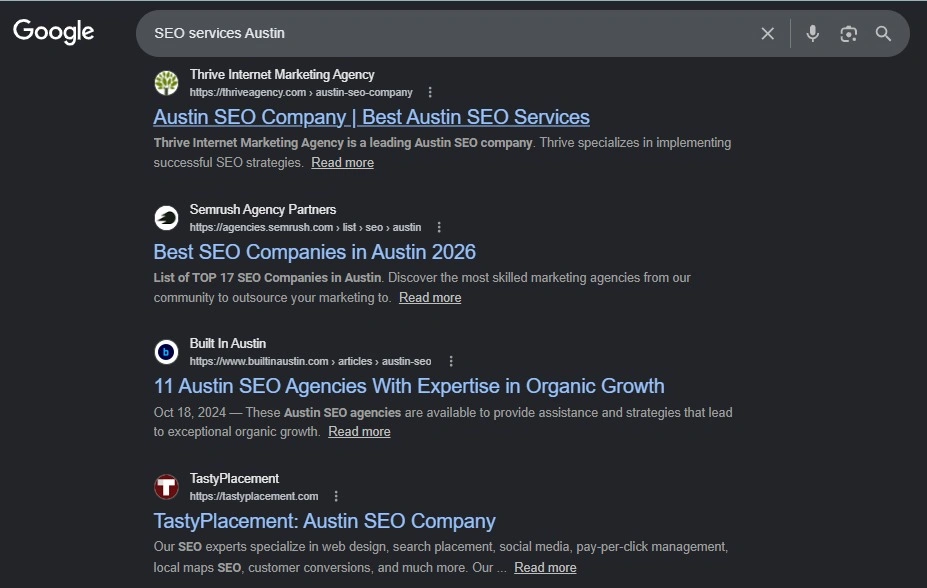
Every great local keyword research process starts the same way. You make a simple list.
Write down every service you offer. Then write down every city, neighborhood, district, or area you serve. Now combine them into search phrases.
For example, if you are a digital marketing agency serving Austin, Texas, your starter list might look like this. “SEO services Austin” is a clear starting point. “Digital marketing agency Austin, TX” is another. “Social media marketing Dallas,” “Google Ads management Houston,” and “content marketing agency Texas” all belong on that list too.
These are your seed keywords. Think of them as the starting point, not the finish line.
You do not need a fancy tool to begin finding valuable local keywords. Just head to Google and search for your service plus your city. Type “Austin plumber” or “dentist in Fort Worth” and see what appears. Then look closely at what shows up in the search engine results pages. Map Pack listings and Google Business Profile descriptions often include the exact target keywords local businesses are using to win rankings.
Pay close attention to those Map Pack descriptions. Notice the language businesses use to describe themselves. This is pure keyword intelligence hiding in plain sight.
Step 2: Use Google Autocomplete and People Also Ask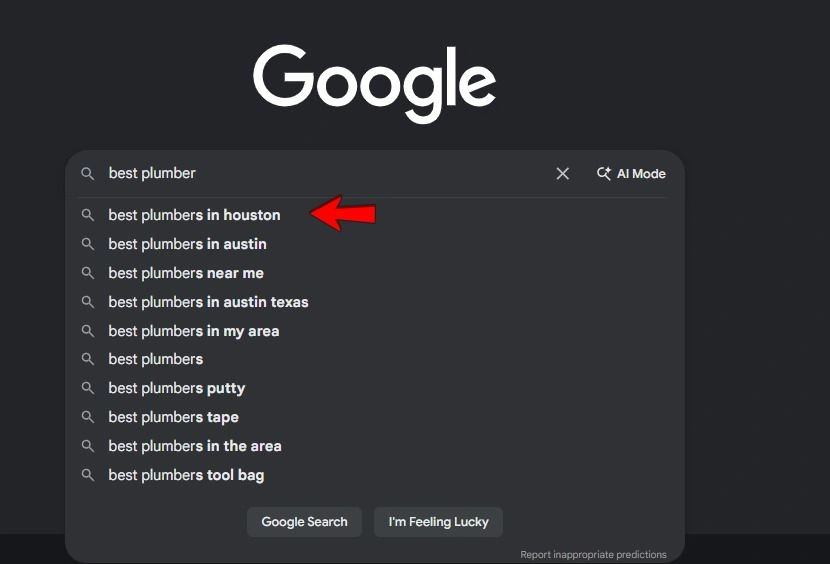
Google is your best free keyword research tool. Most people do not use it nearly enough for local research.
Type your service and location into the Google search bar. Do not hit enter yet. Watch what appears in the dropdown suggestions. Every suggestion represents a search that real people have already performed. These are not guesses. These are actual customer searches happening in your market right now.
For example, typing “digital marketing agency Austin” might reveal suggestions like “digital marketing agency Austin for small businesses” or “best digital marketing company in Austin with pricing.” Those are real searches. Those are real customers looking for exactly what you offer.
Now do the full search and scroll down. Look at the People Also Ask box on the results page. Every question inside that box is a keyword opportunity. These are the exact questions your potential customers are asking Google and AI tools every day.
Google Trends is another powerful free tool for local keyword discovery. It allows you to analyze the popularity of specific keywords over time and across different regions. By identifying trending search terms in Texas, you can align your content strategy with what potential customers are actively looking for right now.
Write down every suggestion and question you find. You will use these throughout your content, your Google Business Profile Q&A section, and your website FAQ pages.
Step 3: Discover Long-Tail Local Keywords
Short keywords like “plumber Houston” are highly competitive. Long-tail local keywords are where the real wins happen for most local businesses.
Long-tail keywords are longer, more specific phrases. They have lower competition but much higher conversion intent. A person typing a long-tail keyword knows exactly what they want and is very close to making a decision.
Here are some strong examples. “Affordable plumber for water leaks in North Dallas” is a long-tail keyword. “Best digital marketing agency for restaurants in San Antonio” is another excellent one. “How to find a reliable electrician near me in Fort Worth” is perfect for AI-era searches.
Long-tail keywords continue to dominate local search. Research consistently shows that around 70% of all search traffic comes from long-tail keywords as users become increasingly specific in how they search.
These keywords are especially powerful in the AI era. AI tools like Google’s AI Overviews and Gemini love answering specific questions. When you create content targeting these precise long-tail searches, you dramatically increase your chances of appearing in AI-generated answers and recommendations.
Use tools like Google Search Console, Semrush, Ahrefs, or Ubersuggest to find long-tail variations of your core keywords. Filter for local intent. Look for keywords that include Texas city names, neighborhood names, or near-me phrases.
If you want expert help identifying the right long-tail local keywords for your business, check out our dedicated keyword research service at 4P Wisdom.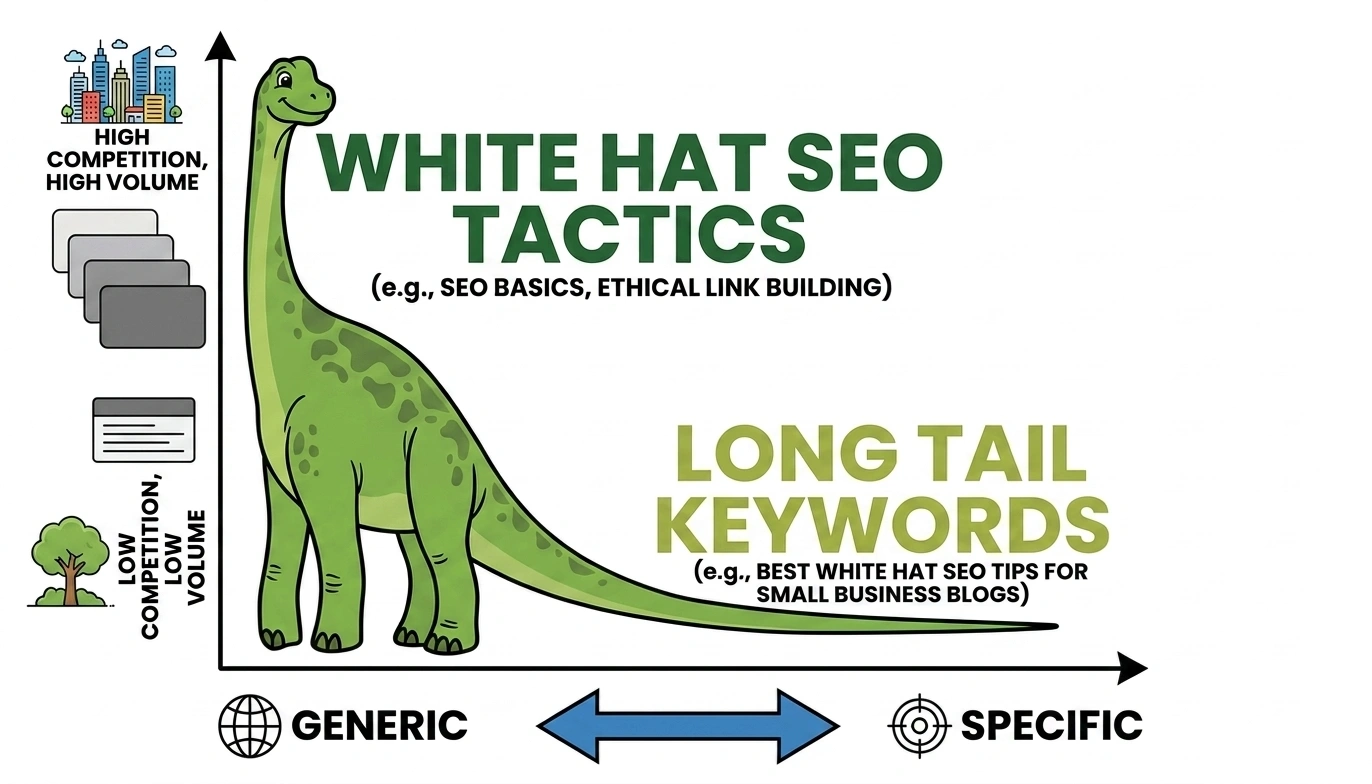
Step 4: Master Near-Me Keywords and How to Rank for Them
Near-me keywords deserve their own section because they are that important to local businesses in 2026.
Local searches are one of the biggest drivers of qualified traffic online. People who add “near me” to their search have extremely high purchase intent. They are not browsing. They are ready to call, visit, or book. This is why near-me keyword optimization translates directly into foot traffic and phone calls, not just website visits.
Now here is the crucial thing most business owners get wrong. You do not actually put the phrase “near me” in your web page content repeatedly. That is keyword stuffing. Google will see through it immediately and penalize your rankings.
Instead, here is how to rank for near-me keywords the right way.
First, make sure your profile is fully optimized using a Google Business Profile optimization checklist. When someone in Austin searches “digital marketing agency near me,” Google relies on your GBP details and location signals to decide which businesses appear. A complete and active Google Business Profile is one of the most important “near me” ranking factors for local SEO. You can learn exactly how to do this through our Google Business Profile optimization service.
Second, use location signals throughout your website naturally. Include your city name, neighborhood name, and nearby landmarks in your page titles, headings, and body content. For example, writing “4P Wisdom serves businesses across Austin, Round Rock, and Cedar Park” is far more powerful than inserting “near me” awkwardly everywhere on the page.
Third, build consistent NAP citations everywhere online. NAP stands for Name, Address, and Phone Number. Your NAP must be identical across every online directory, social platform, and citation where your business appears. Mismatched data confuses Google’s local algorithm and directly suppresses your rankings.
Keep your content updated with trending modifiers too. Phrases like “near me now,” “open today,” and “best rated near me” are growing in search volume. For home service businesses in Texas, optimizing service pages for searches like “24-hour electrician near me in Plano” or “emergency plumber near me in Frisco” captures extremely high-intent traffic.
Step 5: Research Your Competitors’ Local Keywords
Your local competitors have already done a lot of keyword research for you. Use it to your advantage.
Search for your main service in Google along with your Texas city name. Look at who is ranking in the top three positions in the Map Pack and the top five organic results. These businesses have cracked the local SEO code in your specific market.
Visit their websites. Look at their page titles, their headings, and their service page content. What keywords are they targeting? What locations are they mentioning? What phrases do they repeat most often? Write it all down.
Use a tool like Semrush or Ahrefs to dig even deeper. Enter a competitor’s URL and pull their organic keyword data. Filter for keywords that include your city name or regional Texas terms. You will quickly discover gaps, keywords your competitors rank for that you are not yet targeting. These are your most immediate ranking opportunities.
Map Pack descriptions are particularly revealing. GBP descriptions often contain exactly the keywords competitors use to attract local customers. Studying those descriptions gives you direct insight into what is already working in your local market.
Step 6: Use Google Search Console for Existing Local Data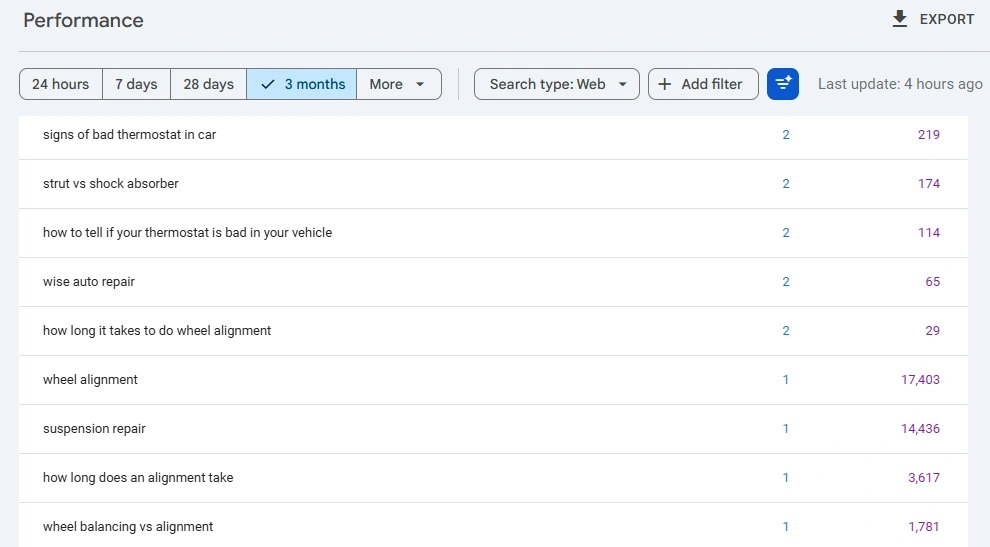
If your website has been live for any length of time, Google Search Console is sitting on a goldmine of local keyword data right now. Most business owners never look at it properly.
Log in and go to the Performance section. Filter your search queries to look for anything that includes a city name, neighborhood, or location-based phrase. You will see exactly what local keywords are already driving impressions and clicks to your site today.
Google Search Console is a free service that gives you deep insight into how users find your content through search. Use it to evaluate which local keyphrases are already working and which ones need improvement. It is one of the most underutilized tools in local SEO.
Look specifically for keywords where you currently rank in positions 4 through 15. These are your quick-win opportunities. You are already close to the top of Google for these terms. With targeted optimization, you can push them into the top three where the real clicks happen.
Step 7: Build Local Keyword Cluster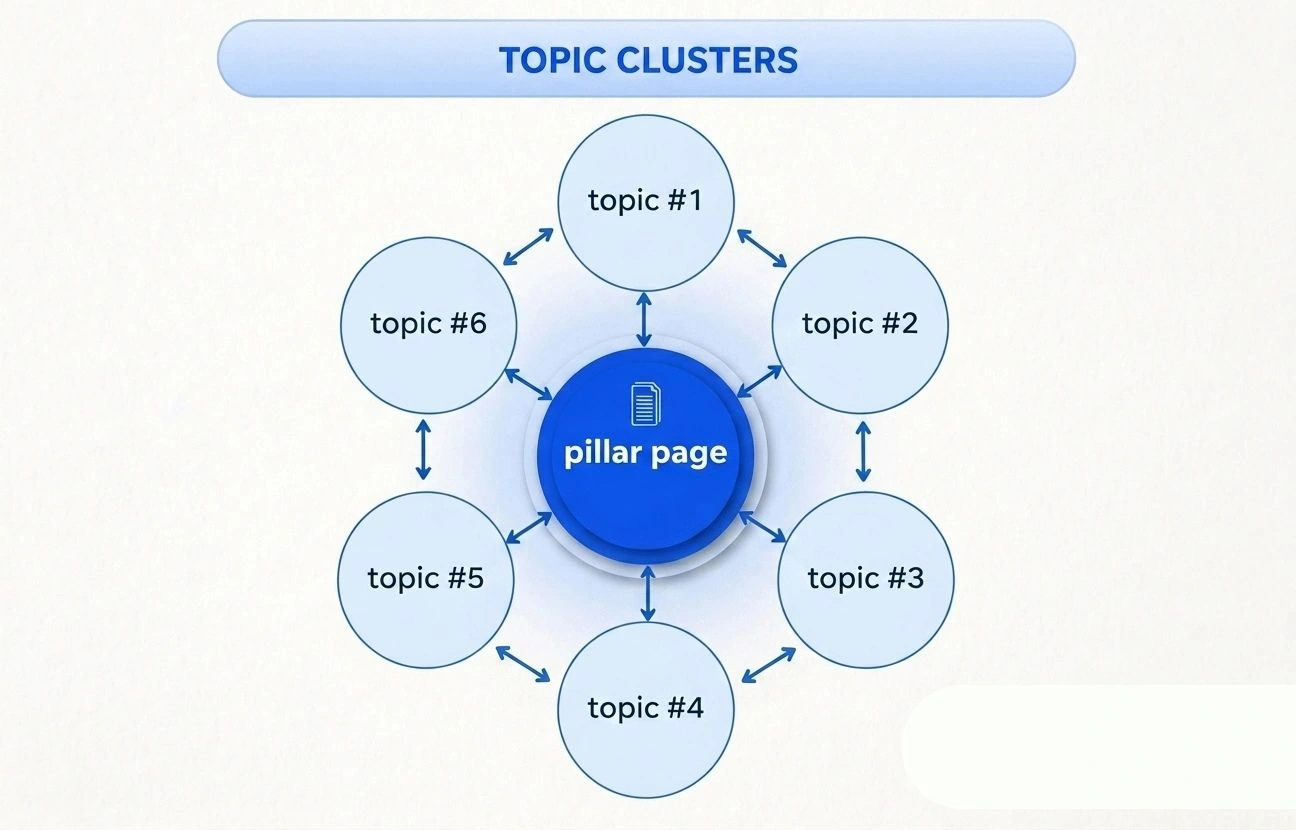
Old-school SEO was about targeting one keyword per page. Modern local SEO keyword research is about building semantic keyword clusters.
A keyword cluster is a group of related keywords that all share the same topic and user intent. You target the entire cluster together on a single, well-structured page.
For example, instead of writing a page targeting only “SEO agency Austin,” you would build a page that covers the full cluster. That cluster might include “SEO services in Austin,” “best SEO company in Austin Texas,” “affordable SEO for small businesses Austin,” “local SEO expert Austin,” and “how to improve Google rankings for Austin businesses.” One page. One comprehensive topic. Multiple ranking opportunities.
Google’s algorithm uses natural language processing to interpret meaning, not just match exact phrases. LSI keywords and semantic terms, which are words and phrases closely related to your main keyword, help search engines understand the full context of your content. This is why pages that cover a topic thoroughly outrank thin pages that target a single keyword.
This approach is exactly what AI search systems love. When your content covers a local topic completely using natural, semantic language, Google’s AI Overviews are far more likely to surface your business as the authoritative local answer.
Our content marketing services build keyword clusters for local businesses and turn them into high-converting content that ranks consistently.
Step 8: Target Conversational and Voice Search Keywords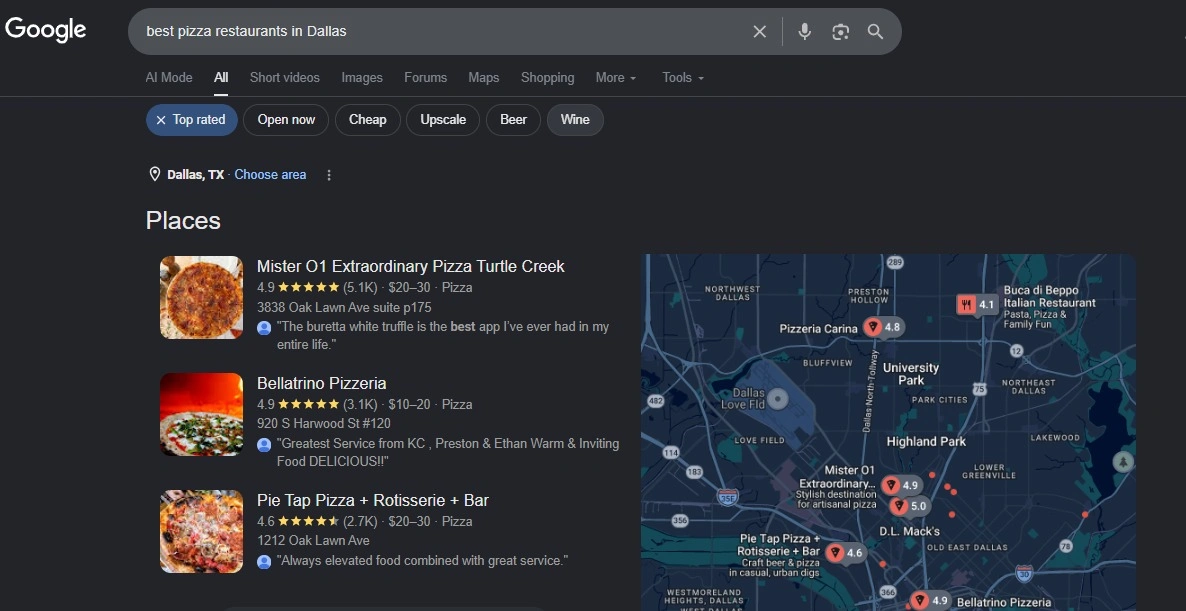
Voice search has permanently changed how people find local businesses. Smart speakers, Siri, Google Assistant, and AI chat tools have made conversational queries the standard in 2026.
A user may type “best pizza restaurants in Dallas” into a search engine. But with voice search, they are far more likely to say, “What are the best pizza restaurants near me?” As voice search adoption increases, conversational keywords become more critical for every local business.
Here is how to find conversational local keywords effectively. Think about what your customers would literally say out loud when searching for your service. Not what they would type in 2015. What they would actually say naturally to a voice assistant today.
They would say, “Where can I find a good digital marketing agency in Austin?” They would ask “Who is the best SEO expert near me in Texas?” They would want to know “Which company does affordable content marketing near Dallas?” These are your voice search keywords.
Write them all down. Create content that answers them directly and completely. Use them in your FAQ sections, your Google Business Profile Q&A, and your blog posts. For AI-specific optimization, include hyper-local references, add location-specific FAQs, use natural local context, and add Schema.org markup for your business information.
Step 9: Map Keywords to Your Local SEO Content Strategy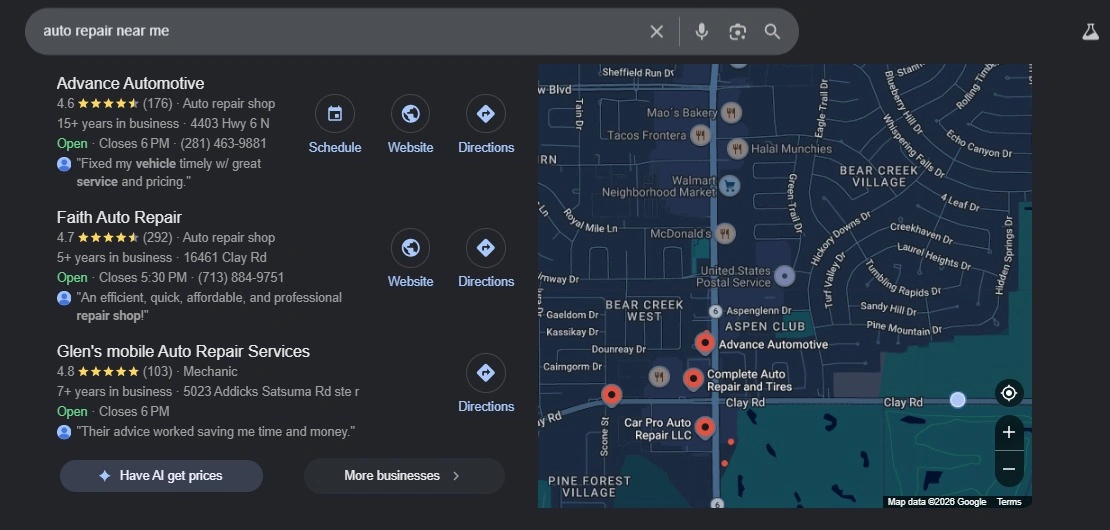
Finding keywords is only half the battle. Where and how you use them matters just as much as which ones you choose.
Here is a simple mapping guide for local marketing keywords.
Your homepage should target your primary service plus your main city. “Digital Marketing Agency in Austin, Texas” is a perfect homepage title target.
Each service page should target a specific service plus a location. “Local SEO Services in Dallas” and “Google Ads Management in Houston” are ideal page-level keywords. Each service deserves its own dedicated page with its own keyword cluster.
Location pages should target your service plus every Texas city or area you serve. If you serve Austin, San Antonio, and Fort Worth, create a dedicated landing page for each city with unique content.
Blog posts should target long-tail questions and informational local keywords. Guides like this one, local case studies, and how-to articles targeting question-based searches capture users at the research stage of their journey.
Your Google Business Profile should use local keywords naturally in your business description, your service descriptions, your Google Posts, and your Q&A answers.
For local SEO, your site should include location-specific pages, clear contact information with schema markup, and content that genuinely answers the needs of your local Texas audience. Embed Google Maps, highlight local testimonials, and showcase your community involvement.
Need help putting this all together into a cohesive local SEO strategy? Our local SEO services cover everything from keyword mapping to content creation and GBP management.
Step 10: Track, Measure, and Refine Your Local Keyword Strategy
Keyword research is never truly finished. It is an ongoing process that requires regular attention and adjustment.
Set up Google Search Console and Google Analytics 4 to monitor your local keyword performance continuously. Track which keywords drive impressions, clicks, and actual conversions. Look at which pages are earning positions in the local pack and which ones need further optimization.
Track local organic rankings separately from your map pack rankings. Monitor conversion actions including phone calls attributed to local search, form submissions from location pages, and direction requests. Each of these signals tells you which keywords are actually driving real business results, not just traffic.
Review your keyword strategy at least once every quarter. Local search patterns change with seasons and trends. New competitors enter your Texas market regularly. Google rolls out algorithm updates multiple times per year. What worked brilliantly six months ago might need refreshing today.
It is good practice to review and update your local keyword strategy at least every six months. Local trends change, and staying current ensures you are always targeting terms with the strongest search activity and relevance in your specific area.
The Best Tools for Local Keyword Research in 2026
Let us talk about the tools that make this entire process faster and more accurate for local businesses.
Google Search Console is completely free and absolutely indispensable. It shows you exactly what keywords you already rank for and where your immediate opportunities lie.
Google Keyword Planner is another free tool from Google. It gives you search volume data and keyword ideas for any location in the country, including every Texas city and region.
Semrush is the industry-leading paid tool for competitive local keyword research. Its Map Rank Tracker feature is especially powerful for tracking local pack positions across different neighborhoods within the same city.
Ahrefs is another premium tool widely used by SEO professionals. Its Keywords Explorer is excellent for finding long-tail local keyword opportunities with manageable competition.
Google Trends helps you discover seasonal keyword patterns specific to Texas regions. This is perfect for planning your local content calendar around events, seasons, and trending topics.
Google Business Profile Insights gives you direct data about what search terms people use to find your GBP listing. This is pure, unfiltered local keyword intelligence you cannot get anywhere else.
AI tools like ChatGPT are increasingly useful for brainstorming conversational keyword variations and question-based query lists. You can upload your keyword CSV and ask AI to group keywords by topic, intent, and local relevance.
For learning deeper keyword research methodology, the Semrush Keyword Research Guide and the Moz Beginner’s Guide to SEO remain two of the most trusted free resources in the digital marketing industry.
Local Keyword Research Mistakes That Kill Rankings
Even experienced SEO professionals make these errors. Knowing them protects you from wasting time and money.
Keyword stuffing is the biggest and most common mistake. Cramming your Texas city name and service term into every sentence does not help rankings. Google’s AI detects it instantly and penalizes you for it. Write naturally and let keywords flow organically within helpful content.
Ignoring neighborhood-level keywords is a costly miss that many businesses make. Most businesses only target their city name. But searchers often use specific neighborhoods, suburbs, and landmarks. “SEO agency in The Woodlands” converts far better than just “SEO agency Houston” for users who live in that area.
Targeting only high-volume keywords is a trap that trips up beginners. High-volume keywords are dominated by large national brands with massive budgets. Focus instead on medium and low-volume keywords with strong local intent. They are easier to win and convert at significantly higher rates.
Forgetting to update keywords as your business grows is another common error. If you have added new services or expanded into new Texas cities, your keyword strategy must reflect that immediately. Stale keyword maps lead to missed opportunities.
Neglecting your Google Business Profile is perhaps the most costly mistake of all. Your GBP is your most powerful tool for ranking in local keyword searches. Every field you leave empty is a ranking signal you are throwing away.
How AI Is Changing Local Keyword Research Forever
Let us talk directly about artificial intelligence and what it means for your local keyword strategy. AI is reshaping local SEO at a rapid pace. But businesses that adapt now will dominate for years ahead.
In the Answer Engine era, your goal is to provide AI search systems with the best possible source material about your business. AI systems evaluate content quality deeply. EEAT principles, which stand for Experience, Expertise, Authoritativeness, and Trustworthiness, matter more than at any previous point in SEO history. Google wants to see that your content comes from someone with genuine knowledge and real-world experience in their field.
Write content that sounds like a real human expert, not a keyword list. Answer questions completely and directly. AI Overviews pull answers from content that directly addresses a searcher’s specific question. When you target a question-based local keyword like “how to choose a digital marketing agency in Austin,” answer that question thoroughly and specifically with real expertise.
Keep your content consistently fresh. Recent analysis confirms that the visibility decay rate is faster in 2026 than ever before. Businesses that had not posted an update or fresh photo in over 30 days experienced significant drops in GBP impressions. Consistent activity signals to Google that your business is alive, relevant, and trustworthy.
Use schema markup throughout your website. Structured data helps AI systems understand your business entity clearly. Use LocalBusiness schema, Service schema, and FAQ schema wherever relevant. This technical step significantly increases your chances of appearing in AI-generated local answers.
Building Your Local Keyword Research Action Plan
Let us bring everything together into a clear, practical action plan you can start immediately.
In week one, list all your services and all the Texas locations you serve. Combine them into seed keywords. Search each one in Google and collect autocomplete suggestions and People Also Ask questions. Fill an entire document with raw ideas.
In week two, run your seed keywords through Google Keyword Planner and a paid tool like Semrush or Ahrefs. Pull your top competitors’ keyword data. Identify your quick-win opportunities in positions 4 through 15 in Search Console.
In week three, organize your keywords into clusters by topic and user intent. Map each cluster to a specific page on your website. List which pages need to be created and which existing pages need to be updated.
In week four, begin creating or optimizing content around your keyword clusters. Update your Google Business Profile with keyword-rich service descriptions. Start your weekly GBP posting schedule.
From month two onward, monitor your Google Search Console data weekly. Track your local pack rankings. Respond to every review within 24 hours. Post weekly on GBP. Refine your strategy based on real performance data and repeat the process.
Final Thoughts
Here is the truth about local keyword research. It is not a one-time project. It is a strategy that compounds over time. Every new keyword you rank for, every new question you answer, every new Texas location page you create builds upon the one before it.
Businesses that invest in local SEO consistently outperform those that do not. They earn more calls, more visits, and more revenue from their digital presence. The businesses that treat local keyword research as a living, evolving strategy are the ones that dominate their markets year after year.
At 4P Wisdom, we have helped businesses across Texas and beyond build local keyword strategies that deliver real, measurable results. From in-depth local SEO keyword research to content creation and Google Business Profile optimization, we handle the entire process.
Ready to stop losing local customers to competitors? Let us build a local keyword strategy that puts your business exactly where your customers are searching.
Frequently Asked Questions About Local Keyword Research
What is local keyword research, and why does it matter?
Local keyword research is the process of finding search terms that potential customers in your specific geographic area use to find businesses like yours. It matters because it helps you appear in front of the right people at exactly the right moment, those who are nearby and ready to act.
What are the best free tools for local SEO keyword research?
Google Search Console, Google Keyword Planner, Google Trends, and Google Business Profile Insights are the best free tools available. They give you real data about how actual customers search for businesses in your local area without spending a single dollar.
How do I rank for near-me keywords?
Ranking for near-me keywords requires a fully optimized Google Business Profile, consistent NAP citations across all directories, genuine location signals throughout your website content, and a steady stream of authentic customer reviews. Focus on building real local relevance signals rather than stuffing “near me” into your content.
How often should I do local keyword research?
Review and refresh your local keyword strategy at least every three to six months. Monitor your Google Search Console performance monthly. After any major Google algorithm update, audit your keyword strategy immediately to ensure nothing has shifted.
What is the difference between local keywords and general keywords?
General keywords have no geographic qualifier. Local keywords include a city name, neighborhood, region, or proximity phrase like “near me.” Local keywords attract users with specific geographic intent, which means they carry much higher purchase intent and convert at significantly higher rates than general keywords.