

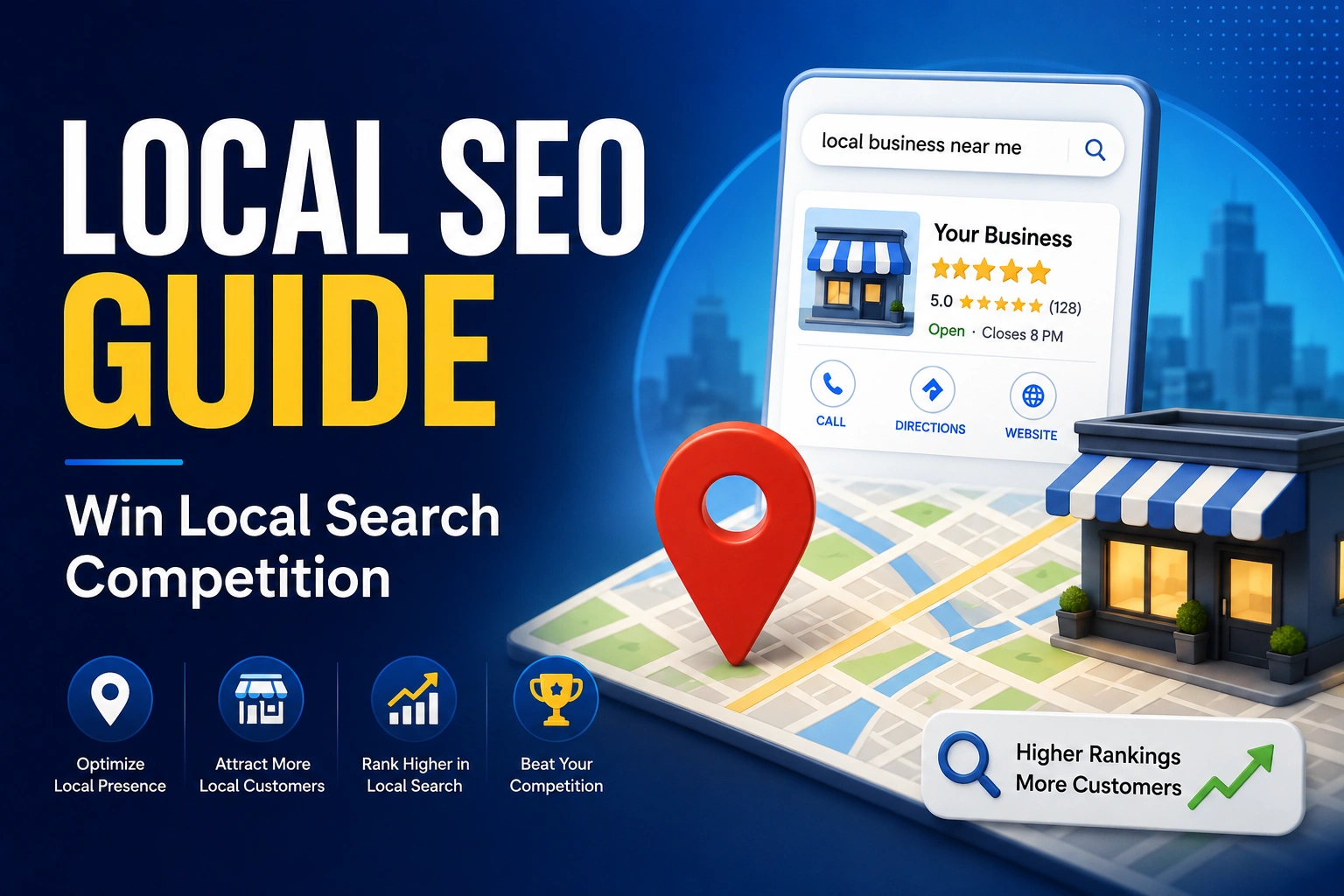
Local SEO is no longer just about ranking on Google Maps.
Today, local search is deeply connected to mobile behavior, AI-powered search experiences, voice assistants, online reviews, brand authority, user experience, and trust signals. Whether someone searches for “best dentist near me,” “emergency plumber in Houston,” or “coffee shop open now,” Google tries to deliver the most relevant, trustworthy, and nearby business instantly.
And here’s the reality:
If your business is not visible in local search results, you are losing customers to competitors every single day.
This guide will walk you through everything you need to know about local SEO in 2026, from Google Business Profile optimization to local content marketing, citations, reviews, AI search optimization, technical SEO, and advanced ranking strategies.
Whether you run a local business, manage SEO campaigns for clients, or operate a multi-location brand, this guide will help you build long-term local visibility.
What Is Local SEO?
Local SEO (Search Engine Optimization) is the process of improving your online visibility in location-based search results.
These search results usually appear when users search for:
- Businesses near them
- Services in a city
- “Near me” searches
- Local professionals
- Maps-based searches
For example:
- “Best pizza in New York”
- “Digital marketing agency in Dubai”
- “24-hour pharmacy near me”
- “AC repair in Katy”
Local SEO helps businesses rank in:
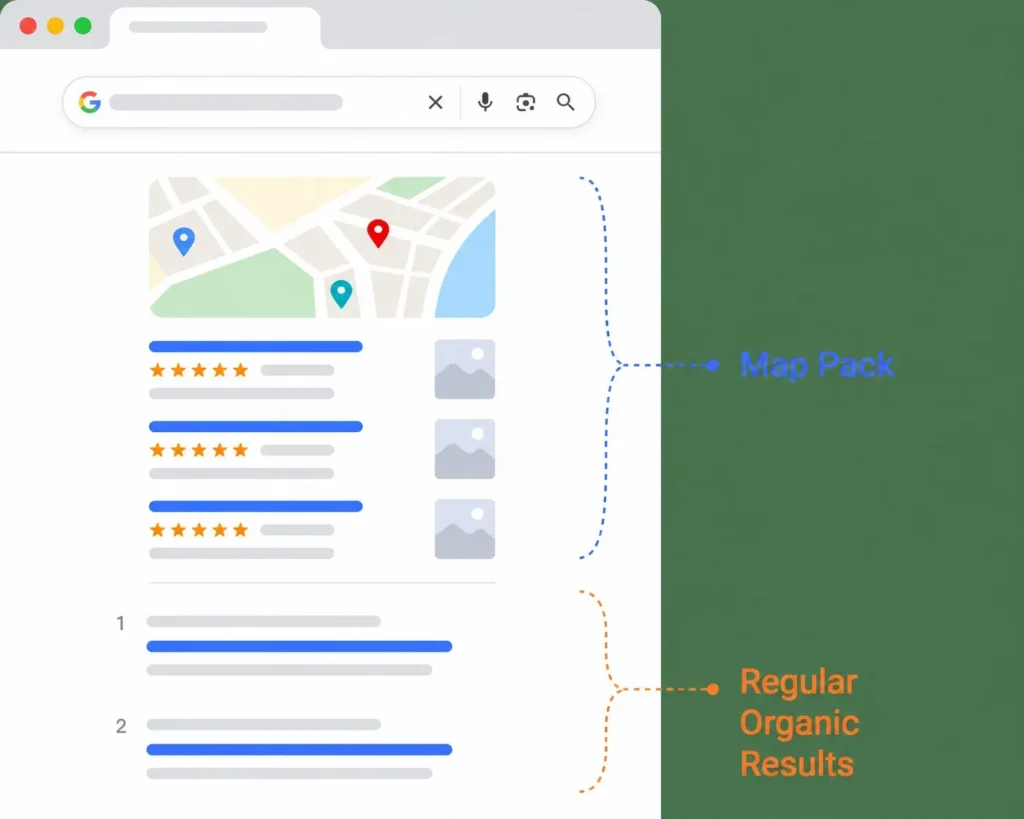
- Google Map Pack
- Google Maps
- Local organic results
- Voice search results
- AI-generated search summaries
Unlike traditional SEO, local SEO focuses heavily on geographic relevance and real-world trust signals.
Why Local SEO Matters More Than Ever
Consumer behavior has changed dramatically over the last few years.
People expect instant answers.
They search on mobile devices while driving, shopping, traveling, or comparing services in real time. Google understands this behavior and prioritizes businesses that provide the best local experience.
According to Google Trends, local intent searches continue to grow year after year.
Searches like:
- “Open now”
- “Near me”
- “Best rated”
- “Closest”
have exploded because users want fast decisions.
The Rise of Mobile Search
Most local searches happen on smartphones. Users often take action within minutes after searching.
That action may include:
- Calling a business
- Visiting a store
- Requesting directions
- Booking an appointment
- Making a purchase
If your business appears prominently in search results, your chances of generating leads increase significantly.
How Google Ranks Local Businesses
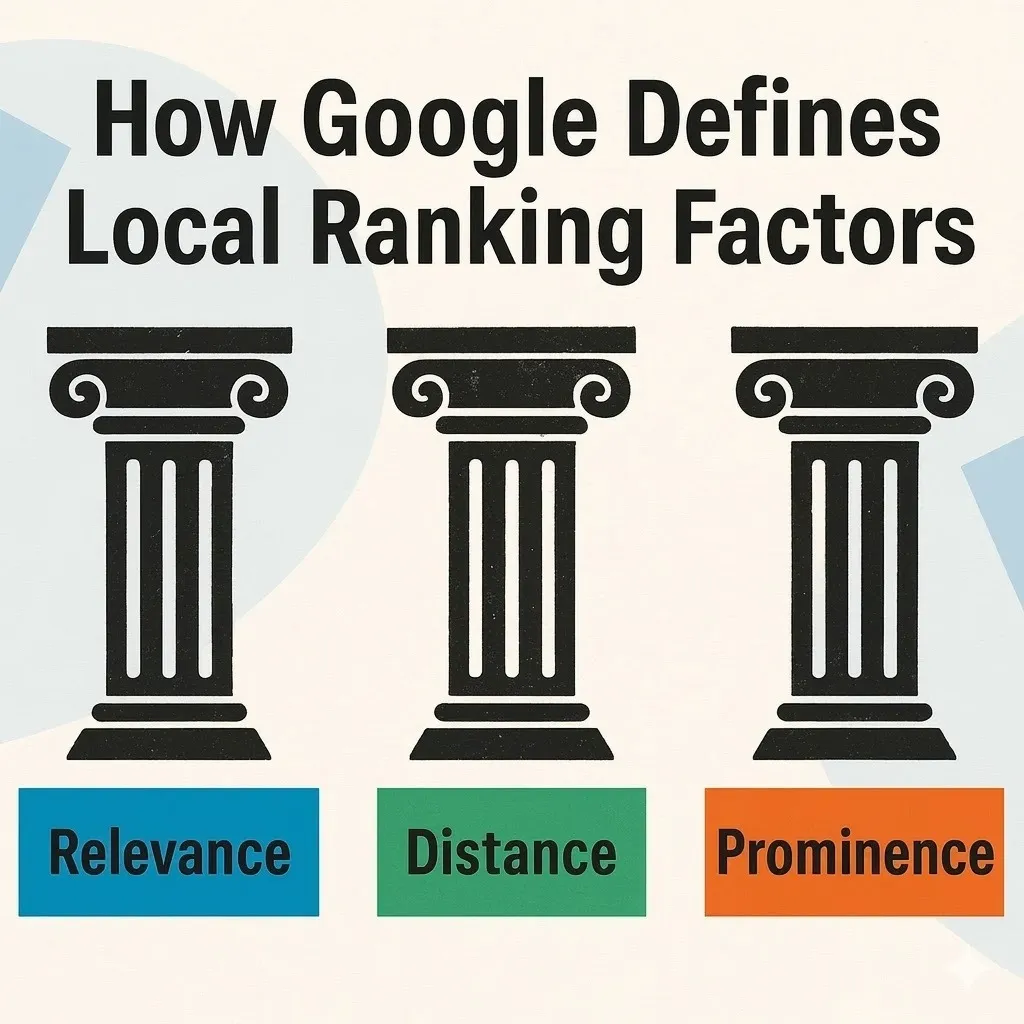
Google uses hundreds of ranking signals to determine local rankings. However, three primary factors dominate local search: relevance, distance, and prominence. Understanding these factors can help businesses improve their visibility in Google Search and Maps. Learn more in our detailed guide on how Google determines relevance, distance, and prominence.
1. Relevance
Relevance measures how closely your business matches a user’s search query.
Google analyzes:
- Business categories
- Website content
- Keywords
- Services
- Reviews
- Business descriptions
- Local landing pages
If your business profile clearly explains what you do, Google can better understand your relevance.
2. Distance
Distance refers to how close your business is to the searcher.
For example, if someone searches for “coffee shop near me,” Google will prioritize nearby businesses. This is why proximity matters heavily in local SEO.
3. Prominence
Prominence reflects your business authority and reputation.
Google evaluates:
- Online reviews
- Local citations
- Backlinks
- Brand mentions
- Website authority
- User engagement
- Media coverage
The stronger your reputation, the better your ranking potential.
Google Business Profile Optimization
Your Google Business Profile optimization checklist is the first step to improving your local SEO. It helps you properly set up and optimize your Google Business Profile (formerly Google My Business) so your business can appear in Google Maps and local search results.
Setting Up Your Profile
Start by creating or claiming your business profile.
Use accurate information:
- Business name
- Address
- Phone number
- Website
- Hours
- Categories
Consistency is critical.
Your business information must match everywhere online.
Choosing the Right Business Categories
Your primary category significantly affects rankings.
For example:
- A dental clinic should select “Dentist” instead of “Healthcare Provider.”
- A law firm should choose “Personal Injury Attorney” if that is the primary service
Secondary categories help Google understand additional services.
Writing an Optimized Business Description
Your Google business profile description should explain:
- What your business does
- Your specialties
- Your location
- Your experience
- Your value proposition
- Avoid keyword stuffing.
- Write naturally for users.
Add High-Quality Photos
Businesses with strong visual profiles often receive more engagement.
Upload:
- Exterior photos
- Interior photos
- Team photos
- Product photos
- Service process images
- Videos
Authentic visuals improve trust.
Advanced Google Business Profile Strategies
Most businesses only complete the basics. That creates opportunities for you.
Optimize Services and Products
Add detailed service descriptions.
Include:
- Pricing
- Features
- Benefits
- Service areas
This helps Google understand your offerings.
Use Google Posts
Google Posts allow businesses to publish updates directly on their profile.
Post regularly:
- Offers
- News
- Events
- Promotions
- Tips
- Case studies
Fresh activity signals business relevance.
Optimize the Q&A Section
Many businesses ignore the Questions & Answers section.
You can proactively add FAQs.
Examples:
- Do you offer emergency services?
- Do you provide free consultations?
- What areas do you serve?
This improves user experience and keyword relevance.
Track Performance with UTM Parameters
Add UTM tags to your website URL.
This helps you measure:
- Website clicks
- Leads
- Calls
- Conversions
inside Google Analytics.
Local Keyword Research
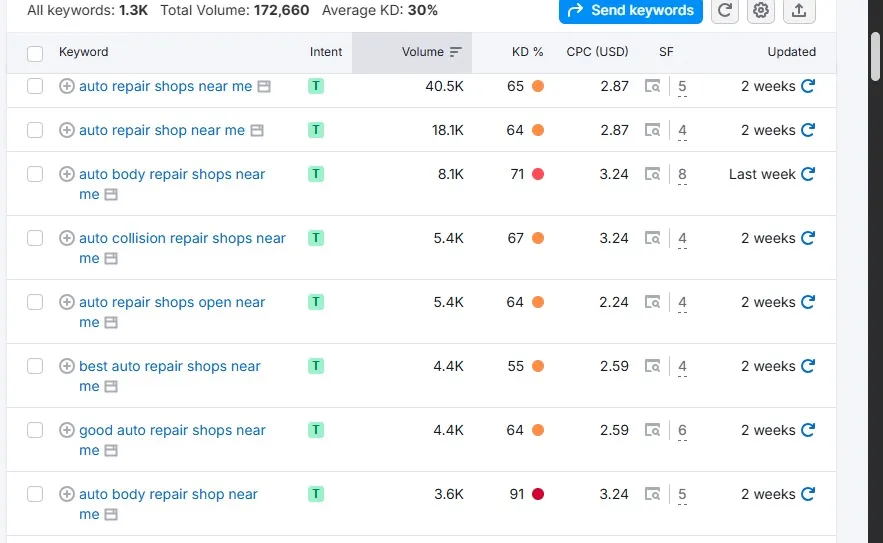
Keyword research helps you understand how customers search.The goal is not just traffic but qualified local traffic.
Types of Local Keywords
Geo-Modified Keywords
These include a location.
Examples:
- “SEO agency in London”
- “Roof repair Dallas”
- “Family lawyer Toronto”
Service Keywords
These describe your offering.
Examples:
- Emergency plumber
- Cosmetic dentist
- Personal trainer
Near Me Keywords
Google understands user location automatically. You do not always need to include “near me” on pages. However, understanding search intent matters.
Find Keyword Opportunities
Use tools like:
- Google Keyword Planner
- Ahrefs
- Semrush
- Google Search Console
- Google autocomplete
- People Also Ask
Look for:
- Search volume
- Intent
- Competition
- Commercial value
Website Structure for Local SEO
Your site architecture influences rankings. A well-structured local website helps search engines crawl and understand your pages.
Ideal Structure
A typical local SEO structure looks like this:
- Homepage
- Service pages
- Location pages
- Blog content
- Contact page
- About page
Create Dedicated Service Pages
Avoid combining every service into one page.
Instead:
- /plumbing-services/
- /drain-cleaning/
- /water-heater-repair/
Each page should target a unique search intent.
Create Location Pages
If you serve multiple areas, create dedicated pages.
Examples:
- /seo-services-houston/
- /seo-services-katy/
- /seo-services-austin/
Each page should contain unique local content. Never duplicate content across cities.
On-Page SEO for Local Rankings
On-page SEO helps Google understand your pages.
Optimize Title Tags
A strong local title tag includes:
- Primary keyword
- City name
- Brand name
Example:
“Best Dental Clinic in Dubai | ABC Dental Care”
Write Compelling Meta Descriptions
Your meta description should improve click-through rate.
Include:
- Services
- Benefits
- Local references
- Call to action
Use Proper Heading Structure
Organize content using:
- H1
- H2
- H3
This improves readability and semantic structure.
Add Local Business Schema
Schema markup helps search engines understand your business details.
Important schema types include:
- LocalBusiness
- Organization
- FAQ
- Review
- Service
Structured data improves visibility in search results.
Creating High-Converting Location Pages
Many businesses create weak location pages. Google can detect thin or duplicate content. To rank effectively, location pages need real value.
What to Include
A high-performing location page should include:
- Unique local content
- Service information
- Testimonials
- Local landmarks
- Directions
- Maps
- FAQs
- Reviews
- Team information
- Case studies
Add Real Local Relevance
Mention:
- Neighborhoods
- Nearby areas
- Local customer problems
- Regional preferences
- Community involvement
This increases topical relevance.
Local Content Marketing
Content marketing is a powerful local SEO strategy. Google rewards businesses that consistently publish useful content.
Create Hyperlocal Content
Examples:
- “Best Cafes in Houston”
- “Winter Plumbing Tips for Chicago Homes”
- “How Dubai Heat Impacts AC Systems”
Hyperlocal content helps establish geographic authority.
Build Topic Clusters
Instead of isolated blog posts, create content ecosystems.
For example:
Main topic:
“Local SEO for Dentists”
Supporting content:
- Google Business Profile for dentists
- Dental SEO keyword research
- Dental review strategies
- Local link building for dental clinics
This improves topical authority.
Publish Case Studies
Real-world examples build trust.
Show:
- Traffic growth
- Ranking improvements
- Lead increases
- Revenue impact
Case studies improve conversions and EEAT signals.
Local Link Building
Backlinks remain one of the strongest ranking factors. Local SEO requires local authority.
Build Local Citations
A citation is any online mention of your business.
Examples include:
- Yelp
- Yellow Pages
- Bing Places
- Apple Maps
- Industry directories
Consistency matters.
Your NAP information must match exactly.
Earn Local Backlinks
Strong local links can come from:
- Local newspapers
- Community blogs
- Chambers of commerce
- Sponsorships
- Universities
- Events
- Local influencers
These links improve prominence.
Digital PR for Local SEO
Digital PR campaigns can generate powerful authority signals.
Examples:
- Original data studies
- Community initiatives
- Local charity partnerships
- Industry insights
PR-driven links are often difficult for competitors to replicate.
Citations and NAP Consistency
NAP stands for:
- Name
- Address
- Phone number
Google uses this data to validate business legitimacy.
Common Citation Problems
Businesses often have:
- Old addresses
- Wrong phone numbers
- Duplicate listings
- Inconsistent abbreviations
These inconsistencies hurt rankings.
Citation Audit Process
Review all major directories.
Correct:
- Spelling
- Formatting
- URLs
- Categories
Use citation tools to simplify management.
Online Reviews and Reputation Management
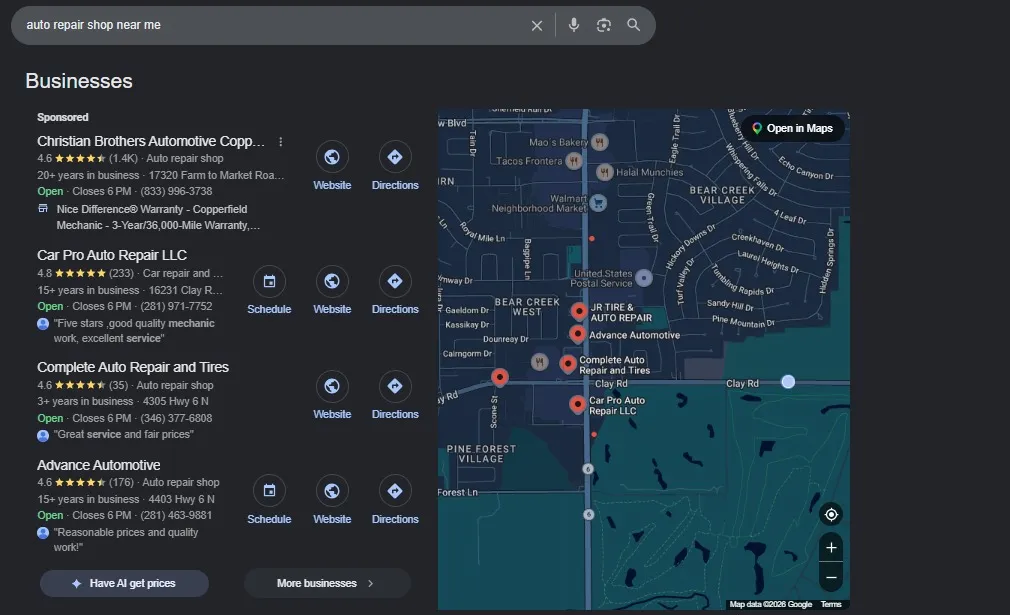
Online reviews play a major role in the success of any local business. They don’t just influence whether potential customers choose your business; they also affect how visible you are in local search results. In today’s digital landscape, reviews have become one of the strongest trust signals for both consumers and search engines.
People naturally rely on the experiences of others before making decisions. Whether someone is searching for a restaurant, clinic, salon, law firm, or retail store, reviews often shape their first impression. A business with strong ratings and authentic customer feedback immediately appears more credible and trustworthy.
Search engines like Google also pay close attention to reviews. Google uses review signals to better understand the quality, relevance, and reputation of a business. This is why review management is no longer optional for local SEO; it is a critical part of building online visibility and increasing conversions.
How Reviews Impact Local SEO
Reviews influence several important ranking and performance factors, including:
- Click-through rates from search results
- Local search rankings
- Customer trust and credibility
- User engagement
- Conversion rates
When a business has a steady flow of positive reviews, it sends strong trust signals to Google. This can improve local prominence, which is one of the key factors used in local ranking algorithms. Businesses with higher ratings and active review profiles are more likely to appear in Google’s local pack and map results.
Reviews also impact customer behavior directly. A business with dozens of recent, positive reviews is far more likely to attract clicks and inquiries compared to a competitor with limited or outdated feedback.
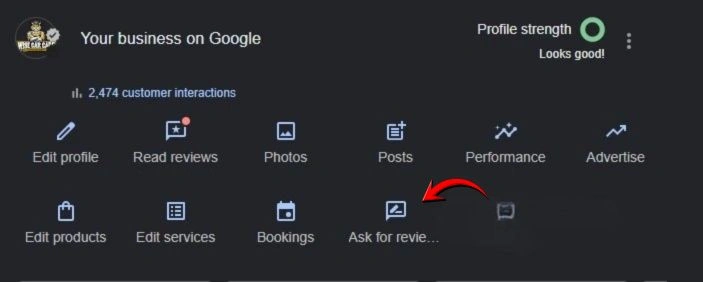
How to Get More Customer Reviews
Generating reviews consistently should be part of every business’s customer experience strategy. The best approach is to make the process simple, convenient, and natural for customers.
Businesses can encourage reviews through methods such as:
- SMS review requests
- Email follow-up campaigns
- QR codes on receipts, packaging, or tables
- In-store reminders and signage
- Automated review management systems
Timing is also important. Customers are more likely to leave a review shortly after a positive interaction or successful purchase. A polite and well-timed request can significantly increase response rates.
Most importantly, remove friction from the process. Direct review links, mobile-friendly forms, and clear instructions make it easier for customers to take action.
Why Responding to Reviews Matters
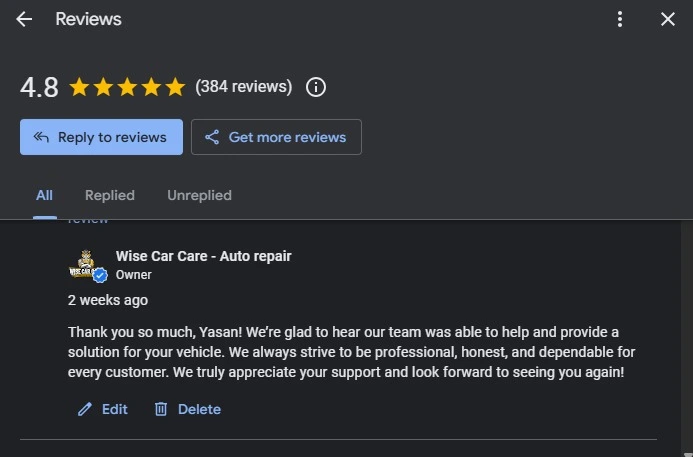
Responding to reviews demonstrates professionalism, transparency, and customer care. It shows potential customers that the business values feedback and actively engages with its audience.
Businesses should respond to:
- Positive reviews
- Negative reviews
- Neutral feedback
Thanking customers for positive feedback helps strengthen relationships and encourages loyalty. Responding thoughtfully to negative reviews can help repair trust and demonstrate accountability. Even neutral reviews provide an opportunity to show attentiveness and improve customer perception.
From an SEO perspective, active review engagement also sends positive signals to search engines. Consistent responses indicate that the business is active, responsive, and customer-focused, all of which contribute to stronger trust and reputation signals online.
E-E-A-T and Local SEO
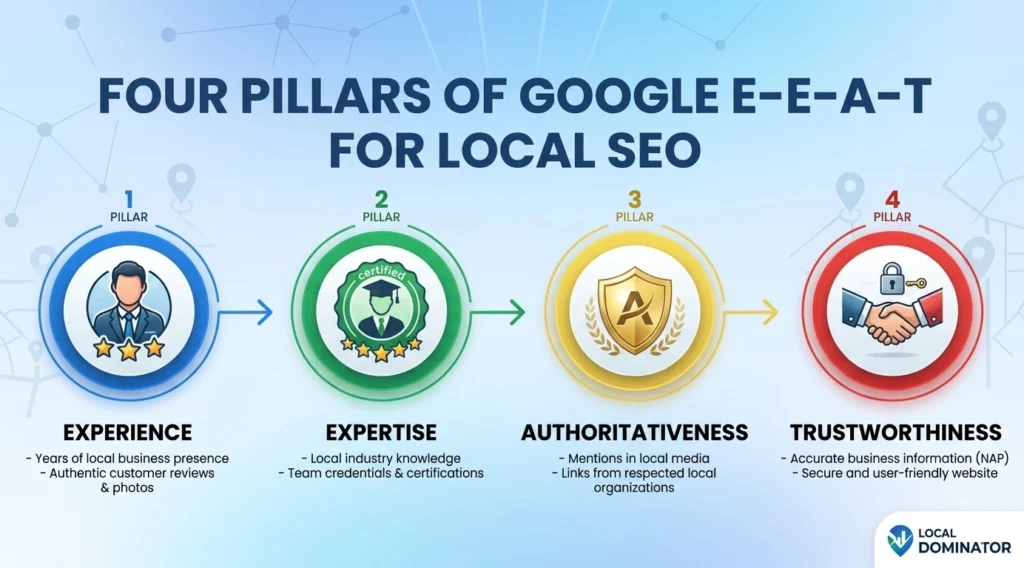
Google places a strong emphasis on E-E-A-T, which stands for Experience, Expertise, Authoritativeness, and Trustworthiness. These quality signals help Google determine whether a business or website is credible, reliable, and deserving of visibility in search results.
For local businesses, E-E-A-T is especially important because customers are often making decisions based on trust. Whether someone is looking for a doctor, contractor, lawyer, restaurant, or agency, they want confidence that the business is legitimate, experienced, and capable of delivering quality service.
Google’s algorithms are designed to reward businesses that clearly demonstrate credibility and authenticity online.
Build Strong Trust Signals
Trust signals help both search engines and customers feel more confident about your business. The more transparent and credible your website appears, the stronger your local SEO foundation becomes.
Important trust-building elements include:
- Detailed team bios
- Professional certifications
- Industry licenses
- Awards and recognitions
- Authentic business photos
- Customer testimonials
- Case studies and success stories
These elements show that your business is real, experienced, and actively serving customers. They also help differentiate your brand from competitors with thin or generic websites.
For example, showcasing real staff members, office locations, completed projects, or customer success stories creates a stronger sense of authenticity. Google values websites that provide clear evidence of real-world expertise and experience.
Strengthen Your About Page
Your About page is one of the most important trust-building pages on your website. It should do more than simply describe your services; it should tell the story behind your business.
A strong About page should include:
- Founder or leadership information
- Company background and history
- Your mission and values
- Community involvement
- Industry experience and achievements
This content helps humanize your brand and builds an emotional connection with potential customers. People are more likely to trust businesses that feel transparent, established, and personally invested in their work.
From an SEO perspective, a detailed About page also helps Google better understand your business, expertise, and authority in your local market.
Use Real Author Profiles for Content
If your website publishes blog posts, guides, or educational content, it’s important to include real author profiles. Anonymous or generic content tends to appear less trustworthy, especially in competitive industries.
Author bios should include:
- The writer’s name
- Professional background
- Experience or credentials
- Areas of expertise
- A professional photo, when possible
This reinforces expertise signals and gives readers confidence that the content is written by someone knowledgeable in the field. Strong author profiles also contribute to overall website credibility, helping improve both trust and long-term SEO performance.

Technical SEO for Local Websites
Technical SEO is the foundation of every successful local SEO strategy. Even if your website has great content and strong backlinks, poor technical performance can limit your visibility in search results.
Search engines need to crawl, understand, and index your website efficiently. At the same time, users expect fast, smooth, and mobile-friendly experiences. When technical issues exist, both rankings and user experience suffer.
A technically optimized website helps search engines trust your business and improves the likelihood of ranking in local search results.
Improve Site Speed
Website speed plays a major role in both SEO and user satisfaction. Local users often search with immediate intent, meaning they expect websites to load quickly and provide instant information.
Slow-loading websites increase bounce rates and reduce conversions. If visitors leave before interacting with your content, Google may interpret that as a poor user experience.
To improve site speed, optimize areas such as:
- Image compression and sizing
- Web hosting performance
- CSS optimization
- JavaScript reduction and deferment
- Browser caching and server caching
Google’s Core Web Vitals are also important ranking signals. These metrics measure loading speed, visual stability, and interactivity. A fast and responsive website creates a better overall experience for both users and search engines.
Mobile Optimization
Most local searches now happen on mobile devices. People frequently search for businesses while traveling, shopping, or looking for immediate services nearby.
Because of this, your website must provide an excellent mobile experience.
A mobile-friendly website should:
- Load quickly on smartphones
- Display properly on all screen sizes
- Use large and clickable buttons
- Provide smooth and simple navigation
- Make contact information easy to access
Google uses mobile-first indexing, meaning it primarily evaluates the mobile version of your website when determining rankings. If your mobile experience is poor, your local visibility can decline significantly.
Fix Crawl and Indexing Errors
Search engines must be able to crawl and index your website without obstacles. Technical errors can prevent important pages from appearing in search results.
Google Search Console is one of the best tools for identifying technical SEO problems. It helps uncover issues such as:
- Broken pages and 404 errors
- Redirect chains and redirect loops
- Indexing problems
- XML sitemap errors
- Mobile usability issues
Regular technical audits help ensure your website remains healthy and accessible. Even small technical problems can negatively impact local search performance over time.

Local Schema Markup
Schema markup is structured data added to your website’s code that helps search engines better understand your content and business information.
Structured data improves machine understanding and helps search engines interpret your website more accurately.
As search engines and AI-driven search systems continue evolving, schema markup is becoming increasingly valuable for local SEO.
Important Schema Types for Local SEO
LocalBusiness Schema
LocalBusiness schema helps define essential business details, including:
- Business name
- Address
- Phone number
- Business hours
- Services offered
- Contact information
This structured data helps search engines confirm the legitimacy and relevance of your business.
FAQ Schema
The FAQ schema allows search engines to better understand question-and-answer content on your website. When implemented correctly, it can improve search visibility by generating expanded search listings in the SERPs. These enhanced listings often attract more clicks and improve engagement.
Review Schema
Review schema highlights customer ratings, testimonials, and review information.
This can help reinforce trust signals and improve how your business appears in search results.
Why Schema Markup Matters
Schema markup provides several important SEO benefits, including improved:
- Rich search results
- Click-through rates
- Semantic understanding
- Entity recognition
Structured data helps search engines connect your business with relevant local searches more accurately. It also strengthens your overall digital presence as AI-powered search engines rely more heavily on contextual understanding and entity relationships.
For local businesses, schema markup is no longer just an advanced SEO tactic; it is becoming an essential part of long-term search visibility and online competitiveness.
Multi-Location SEO Strategy
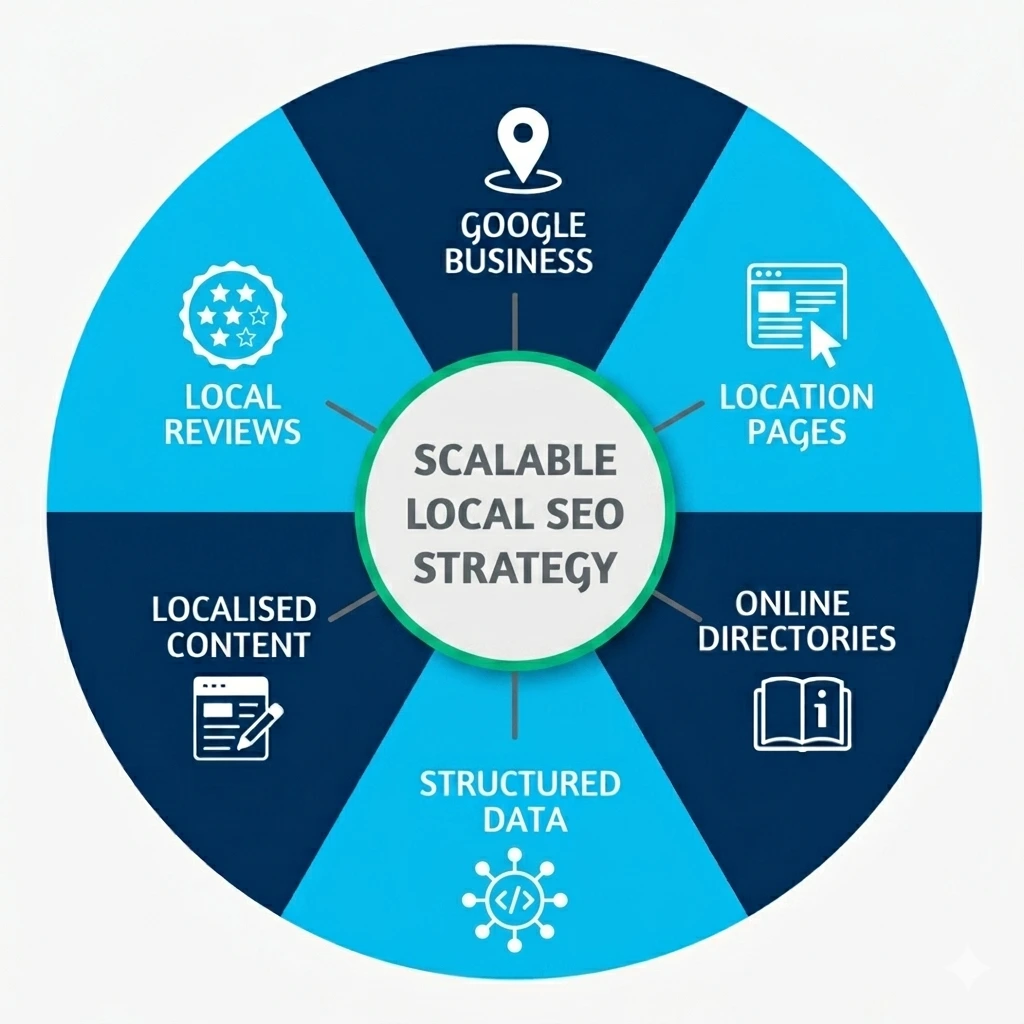
Managing SEO for multiple business locations requires a scalable and organized strategy. As businesses expand into different cities or regions, maintaining strong local visibility for each branch becomes increasingly important.
Many multi-location businesses make the mistake of treating every location the same. However, search engines prioritize unique, location-specific experiences. Simply duplicating pages with minor edits can weaken rankings and reduce overall search performance.
A successful multi-location SEO strategy focuses on creating unique local relevance for every branch while maintaining consistent branding across the entire business.
Create Unique Location Pages
Each business location should have its own dedicated page on your website. These pages help search engines understand where your business operates and which local audiences each branch serves.
Strong location pages should include:
- Unique written content
- Local images and office photos
- Team or staff information
- Customer testimonials from that location
- Location-specific services
The goal is to make every page genuinely useful and locally relevant. Avoid copying the same template across dozens of pages with only the city name changed. Thin or duplicate content can limit rankings and reduce trust signals.
Instead, highlight what makes each location unique. Mention local landmarks, neighborhoods served, community involvement, or specific specialties offered by that branch. This creates stronger geographic relevance and improves user engagement.
Optimize Individual Google Business Profiles
Every business location should have its own fully optimized Google Business Profile listing.
Each profile should include:
- The most accurate business categories
- Correct business hours
- High-quality local photos
- Updated contact information
- Individual customer reviews
Location-specific optimization helps Google better associate each branch with relevant local searches.
Encouraging reviews for each individual location is also essential. A strong review profile improves local prominence and helps potential customers trust nearby branches more easily.
Consistency is equally important. Your business name, address, and phone number should remain accurate and consistent across your website, local directories, and Google Business Profiles.
Use a Store Locator
A well-designed store locator is one of the most valuable assets for enterprise and multi-location SEO.
An effective store locator improves:
- User experience
- Website crawlability
- Internal linking structure
- Local discoverability
Store locator pages help both users and search engines navigate your business locations efficiently. They also strengthen internal linking between regional pages, improving overall site architecture.
Many enterprise brands underestimate the SEO value of a properly optimized store locator. Poorly built locator systems often rely heavily on JavaScript, create indexing problems, or fail to provide enough unique local content.
An SEO-friendly store locator should include crawlable location pages, clear navigation paths, optimized metadata, and structured business information for every branch.
Why Scalability Matters
As the number of locations grows, maintaining SEO quality becomes more challenging. Businesses need systems and workflows that allow them to scale without sacrificing local relevance.
This includes:
- Standardized SEO guidelines
- Centralized review management
- Consistent local citations
- Scalable content creation processes
- Ongoing technical audits
The businesses that succeed in multi-location SEO are those that balance consistency with local personalization. Search engines want to see that every location provides real value to its local audience, not simply replicated content spread across multiple cities.
AI and the Future of Local SEO
Artificial intelligence is rapidly transforming the way search engines deliver information. Traditional keyword-based search is evolving into a more intelligent system that focuses on understanding context, intent, and real-world entities.
One of the biggest changes is the rise of AI-generated search experiences, including Google AI Overviews, which summarize information directly within search results. Instead of simply displaying a list of websites, search engines are increasingly providing direct answers, recommendations, and business insights instantly.
This shift is changing how users interact with local search results. People now expect faster answers, more accurate recommendations, and immediate trust signals before they even visit a website.
As AI-powered search continues to evolve, businesses must adapt their local SEO strategies to remain visible and competitive.
Optimize for AI-Driven Search
AI systems prioritize content that is easy to understand, trustworthy, and well-structured. Websites that communicate information clearly are more likely to be referenced or surfaced within AI-generated search experiences.
AI search systems tend to favor:
- Clear and direct answers
- Well-structured content
- Trusted and authoritative brands
- Strong entity relationships
- Strong E-E-A-T signals (Experience, Expertise, Authoritativeness, and Trustworthiness)
This means businesses should focus less on keyword stuffing and more on creating genuinely useful, organized, and authoritative content.
Content should answer real customer questions clearly and efficiently. Structured headings, FAQ sections, schema markup, and organized page architecture all help AI systems better interpret website information.
Entity SEO Is Becoming More Important
Search engines are moving beyond simple keyword matching and increasingly relying on entity understanding.
An entity is a clearly identifiable thing that search engines can recognize and connect to other information across the web.
For local businesses, entities may include:
- Your business name
- Services offered
- Locations
- Founders or leadership
- Products
- Industry affiliations and associations
Search engines now build relationships between these entities to better understand businesses and their relevance within specific industries or locations.
The stronger and more consistent your entity footprint becomes, the easier it is for AI systems to recognize your authority and relevance.
For example, if your business is consistently connected with certain services, locations, experts, and customer reviews across multiple trusted platforms, search engines gain greater confidence in your legitimacy.
Build Brand Mentions Across the Web
Brand mentions are becoming increasingly valuable in AI-driven SEO. Even when a website does not receive a direct backlink, mentions across trusted platforms help reinforce brand recognition and authority.
Important sources of brand mentions include:
- News publications
- Podcasts
- Business directories
- Social media platforms
- Interviews and guest appearances
- Online reviews and testimonials
AI systems analyze these references to better understand your reputation, influence, and credibility within your industry.
Consistent mentions across authoritative sources strengthen your digital presence and contribute to entity recognition. Over time, this helps search engines associate your business with expertise and trustworthiness in your local market.
Voice Search Optimization
Voice search is becoming an increasingly important part of local SEO. As more people use smartphones, smart speakers, and voice assistants, search behavior is shifting toward natural, conversational language.
Instead of typing short phrases, users now ask complete questions such as:
- “Where is the best sushi restaurant near me?”
- “Who is the top real estate agent in Houston?”
These searches are typically more conversational, location-focused, and intent-driven. Voice users often want quick answers and immediate solutions, especially when searching for nearby businesses or local services.
As voice technology continues improving, businesses that optimize for conversational search patterns will have a stronger opportunity to capture local traffic.

Optimize for Conversational Search
Traditional keyword strategies alone are no longer enough for voice search optimization. Businesses need content that reflects how people naturally speak.
Voice queries are usually:
- Longer
- More conversational
- Question-based
- Intent-focused
To improve visibility for voice searches, websites should use natural language throughout their content. Writing in a clear and human tone helps search engines better match your pages to spoken queries.
One of the most effective strategies is adding FAQ sections to important pages. FAQs naturally align with the way users ask questions through voice assistants.
Examples include:
- “What areas do you serve?”
- “How much does the service cost?”
- “What are your business hours?”
- “Do you offer emergency appointments?”
Targeting question-based keywords also helps increase relevance for conversational searches. These keywords often begin with phrases like:
- Who
- What
- Where
- When
- Why
- How
By directly answering these questions, businesses improve their chances of appearing in voice search results.
Focus on Featured Snippets
Featured snippets are especially important for voice search because voice assistants frequently pull spoken answers directly from these search results.
Search engines prefer content that is:
- Clearly structured
- Easy to understand
- Concise and direct
- Well organized
To increase your chances of earning featured snippets:
- Use clear headings and subheadings
- Answer questions immediately beneath headings
- Keep answers concise and informative
- Use bullet points and numbered lists when appropriate
For example, if a user asks, “How long does local SEO take?” Google may pull a short, well-structured paragraph directly from a webpage and read it aloud through a voice assistant.
Why Voice Search Matters for Local SEO
Voice searches are heavily tied to local intent. Many users perform voice searches while driving, traveling, shopping, or looking for nearby businesses in real time.
These searches often include phrases like:
- “Near me”
- “Closest”
- “Open now”
- “Best in my area”
Because of this, voice optimization works closely with other local SEO factors such as:
- Google Business Profile optimization
- Mobile-friendly design
- Fast-loading pages
- Accurate local information
- Strong reviews and ratings
Businesses that combine conversational content with strong local SEO foundations are more likely to appear in voice-driven search experiences.
The Future of Voice Search
As AI assistants and voice recognition technology continue evolving, conversational search will become even more advanced and personalized.
Businesses that create content designed for real human conversations rather than just search engines will be better positioned for future search trends.
Voice search optimization is ultimately about clarity, usability, and providing direct answers that help users quickly find the information they need.
Advanced Local SEO Strategies
Once the core elements of local SEO are in place, advanced strategies become the key differentiator between average businesses and market leaders. Foundational optimization helps you compete, but advanced SEO helps you dominate your local niche and build long-term authority.
Modern local SEO is no longer just about rankings. Search engines increasingly evaluate expertise, user behavior, and business credibility when determining visibility.
Businesses that invest in deeper content strategies, stronger user experience, and conversion-focused optimization are more likely to achieve sustainable growth.
Build Topical Authority
Google rewards websites that demonstrate deep knowledge and expertise within a specific subject area. This concept is known as topical authority.
Instead of publishing random blog posts across unrelated topics, successful businesses focus on becoming the most trusted source within their niche.
For example, a roofing company should create content covering every major topic related to roofing services, such as:
- Roof repair guides
- Storm damage prevention
- Roofing material comparisons
- Insurance claim assistance
- Seasonal roof maintenance tips
By consistently publishing useful and relevant content around a focused topic, businesses strengthen their expertise signals and improve semantic relevance in search engines.
This approach helps Google better understand what your business specializes in. Over time, your website becomes more strongly associated with that subject area, improving both rankings and authority.
Topical authority also builds trust with potential customers. When users see detailed educational content answering their questions, they are more likely to view the business as knowledgeable and reliable.
Behavioral SEO and User Engagement
Search engines increasingly analyze how users interact with websites. These behavioral signals help Google understand whether a webpage provides a good user experience and satisfies search intent.
Important engagement metrics include:
- Click-through rate (CTR)
- Time spent on the page
- Bounce rate
- Navigation behavior and interaction patterns
For example, if users frequently click your search result and remain on your website for an extended period, it signals that your content is valuable and relevant.
On the other hand, if visitors leave quickly or struggle to navigate your site, search engines may interpret that as a poor user experience.
Improving behavioral SEO often involves enhancing overall usability, including:
- Better content structure
- Faster loading times
- Clear navigation
- Engaging visuals
- Readable formatting
- Helpful internal linking
The goal is to keep users engaged and guide them naturally toward useful information and conversion actions.
Conversion Optimization for Local SEO
Generating traffic alone is not enough. Local SEO should ultimately support business growth, lead generation, and revenue.
A website that ranks well but fails to convert visitors into customers leaves significant opportunities untapped.
Conversion optimization focuses on improving the elements that encourage users to take action.
Key areas to improve include:
- Strong calls to action
- Simple and effective contact forms
- Clear trust signals
- Customer testimonials and reviews
- Fast page speed
- Mobile-friendly design and navigation
Every page should guide users toward the next step, whether that means calling your business, requesting a quote, booking an appointment, or submitting a form.
Trust also plays a major role in conversions. Businesses that clearly display reviews, certifications, guarantees, awards, and real customer experiences tend to convert visitors more effectively.
The Goal of Advanced Local SEO
Advanced local SEO is about creating a complete digital experience that satisfies both search engines and real users.
The businesses that succeed long-term are those that combine:
- Deep expertise
- Strong content strategy
- Excellent user experience
- Technical performance
- Trust and authority
- Conversion-focused design
Search visibility is valuable, but the ultimate goal of local SEO is business growth. Effective optimization should not only increase rankings but also consistently generate leads, customers, and revenue.
Measuring Local SEO Success
One of the most important parts of local SEO is measurement. Without tracking performance, it becomes impossible to understand what is working, what needs improvement, and how your SEO efforts are impacting actual business growth.
Local SEO should never be treated as guesswork. Successful businesses rely on data to refine strategies, improve visibility, and increase conversions over time.
The goal is not simply to generate rankings it is to generate measurable business results.
Important Local SEO KPIs
Key performance indicators (KPIs) help businesses evaluate the effectiveness of their local SEO campaigns.
Some of the most important local SEO metrics include:
- Map Pack rankings
- Organic website traffic
- Phone calls
- Direction requests
- Contact form submissions
- Revenue generated
- Review growth
- Conversion rates
Each of these metrics provides insight into different stages of the customer journey.
For example:
- Rankings show visibility
- Traffic measures discovery
- Calls and forms measure lead generation
- Revenue measures actual business impact
Tracking multiple KPIs together creates a clearer picture of overall SEO performance.
Monitor Local Rankings Accurately
Local rankings are unique because they vary based on the user’s geographic location. A business may rank differently depending on the city, neighborhood, or even street where the search is performed.
Because of this, traditional ranking reports are often inaccurate for local SEO.
Businesses should use geo-specific rank tracking tools that monitor rankings from precise local areas. These tools help identify:
- High-performing regions
- Weak visibility zones
- Competitor positioning
- Keyword movement across locations
Accurate local tracking provides better insight into how visible your business truly is within your target service areas.
Measure User Actions and Engagement
Local SEO performance should also be measured through real customer interactions.
Important engagement actions include:
- Phone calls from search results
- Direction requests through maps
- Website contact submissions
- Appointment bookings
- Clicks from Google Business Profile listings
These actions often indicate strong purchase intent and are valuable indicators of local search success.
Platforms such as Google Analytics 4 and Google Search Console help businesses monitor these behaviors and identify where users are converting most effectively.
Attribute Revenue Correctly
The ultimate purpose of local SEO is business growth and revenue generation. Rankings alone do not guarantee success if they do not lead to customers and sales.
Businesses should track leads and revenue generated from:
- Organic search traffic
- Google Maps visibility
- Google Business Profile interactions
- Local landing pages
Proper attribution helps determine which SEO efforts are producing real financial results.
For example, if a specific location page generates a large number of qualified leads, businesses can invest more resources into expanding similar content and optimization strategies.
Revenue tracking also helps justify SEO investments and demonstrates the long-term value of local search visibility.
Why Measurement Matters
Local SEO is an ongoing process, not a one-time setup. Search behavior, competition, and algorithms constantly evolve, which means businesses must continuously analyze and improve performance.
By consistently measuring:
- Visibility
- Engagement
- Leads
- Conversions
- Revenue
Businesses can make smarter strategic decisions and build sustainable long-term growth.
The most successful local SEO campaigns are data-driven, customer-focused, and aligned with real business outcomes rather than vanity metrics alone.
Common Local SEO Mistakes
Many businesses invest time and money into local SEO but unknowingly damage their own performance through avoidable mistakes. Even strong businesses can struggle to rank if their SEO strategy lacks consistency, quality, or user focus.
Understanding these common problems can help businesses avoid setbacks and build a stronger long-term local presence.
Keyword Stuffing
One of the most common local SEO mistakes is overusing city and service keywords throughout a webpage.
Years ago, businesses could rank by repeatedly adding phrases like:
- “Best plumber in Houston”
- “Affordable Houston plumber”
- “Emergency plumber Houston”
across every paragraph.
Today, search engines are far more advanced. Excessive keyword repetition makes content feel unnatural and can reduce both readability and trust.
Instead of forcing keywords unnaturally, businesses should focus on writing clear, helpful, and human-centered content. Search engines now understand context, semantic meaning, and entity relationships far better than simple keyword density.
Natural writing improves both user experience and SEO performance.
Duplicate Location Pages
Many multi-location businesses create dozens of nearly identical location pages with only the city name changed.
This creates thin and duplicate content, which rarely performs well in modern search results.
Every location page should provide unique value by including:
- Original content
- Local service information
- Unique testimonials
- Local team details
- Area-specific insights
- Real images from that location
Search engines prioritize pages that genuinely help users and provide meaningful local relevance.
High-quality location pages improve both trust and rankings, while duplicate templates often struggle to gain visibility.
Ignoring Customer Reviews
Reviews are one of the strongest trust signals in local SEO. Businesses that ignore reviews — especially negative feedback — can damage both reputation and search visibility.
Reviews influence:
- Customer trust
- Click-through rates
- Conversion rates
- Local rankings
Actively managing reviews demonstrates professionalism and customer engagement.
Businesses should consistently:
- Encourage new reviews
- Respond to customer feedback
- Address negative experiences professionally
- Maintain an active review profile
Ignoring reviews creates the impression that the business is inactive or unconcerned about customer satisfaction.
Weak Internal Linking
Internal linking is often overlooked in local SEO, yet it plays an important role in distributing authority throughout a website.
Strategic internal links help search engines:
- Understand site structure
- Discover important pages
- Pass ranking authority between pages
- Improve topical relevance
For example, a roofing company might internally link between:
- Roof repair pages
- Storm damage articles
- Insurance claim guides
- Location pages
Strong internal linking improves navigation for users while strengthening SEO performance across the website.
Inconsistent NAP Information
NAP stands for Name, Address, and Phone Number.
Consistency across all platforms is essential for local SEO. If business information varies across directories, websites, and listings, search engines may become less confident in the accuracy of the business data.
Inconsistencies can include:
- Different phone numbers
- Old addresses
- Variations in business names
- Incorrect business hours
Maintaining accurate and consistent information across all online platforms helps reinforce legitimacy and trust.
Consistency is especially important for Google Business Profile optimization and local citation management.
The Future of Local SEO
Local SEO is evolving rapidly as search engines become more intelligent and AI-driven.
Modern search algorithms increasingly prioritize factors such as:
- Brand trust
- User experience
- Real-world authority
- Semantic relevance
- Entity relationships
- AI understanding
Search engines are moving beyond simple keyword matching and focusing more on understanding businesses as complete digital entities.
This means businesses must invest not only in technical optimization, but also in:
- Brand credibility
- Customer trust
- High-quality content
- Structured data
- Reputation management
- Consistent online presence
The businesses that adapt early to these changes will gain a significant competitive advantage.
Local SEO Is Becoming More Human
The future of local SEO is increasingly aligned with real human behavior and real-world reputation.
Businesses that provide genuine value, create excellent user experiences, and build authentic authority within their industries will be the ones that dominate future search results.
SEO is no longer just about ranking pages; it is about building a trusted digital presence that search engines and AI systems can confidently recommend to users.
Final Local SEO Blueprint
Sustainable local SEO success does not come from shortcuts, isolated tactics, or temporary ranking tricks. It comes from building a complete digital presence that search engines and customers both trust over time.
The businesses that consistently dominate local search are usually not the ones chasing every algorithm update. They are the ones investing in strong fundamentals, excellent customer experiences, authoritative content, and long-term brand credibility.
If you want lasting local rankings and consistent business growth, focus on these core priorities:
- Optimize your Google Business Profile thoroughly
- Build strong, unique local landing pages
- Create genuinely helpful local content
- Earn high-quality and relevant backlinks
- Generate reviews consistently
- Improve technical SEO performance
- Strengthen E-E-A-T signals
- Build strong entity authority
- Track rankings, leads, and conversions
- Continuously improve user experience
Each of these areas works together to strengthen your local visibility, authority, and conversion potential.
Local SEO Is an Ongoing Growth System
One of the biggest misconceptions about local SEO is that it is a one-time project. In reality, local SEO is an ongoing system that requires continuous improvement and adaptation.
Search engines evolve constantly. Competitors improve their strategies. Customer behavior changes. AI-driven search systems continue becoming more advanced.
Businesses that treat SEO as a long-term investment consistently outperform businesses that approach it as a temporary marketing task.
Long-term success comes from continuously improving:
- Website quality
- Content depth
- Brand trust
- Technical performance
- Customer experience
- Online reputation
The businesses that remain active, relevant, and authoritative over time build a significant competitive advantage.
The Future of Local SEO
Local SEO is becoming increasingly intelligent and entity-driven. Modern search engines no longer rely only on keywords — they evaluate broader signals such as:
- Trust and credibility
- Real-world reputation
- Semantic relationships
- User engagement
- Content quality
- Brand authority
- Entity recognition
As AI-powered search experiences continue evolving, businesses must think beyond traditional optimization tactics.
The future winners in local SEO will not simply be the businesses with the highest keyword density or the largest number of pages.
The businesses that dominate local search over the next decade will be the ones with:
- The strongest digital presence
- The best customer experiences
- The most trusted reputations
- The clearest topical authority
- The strongest semantic and entity signals
Search engines are increasingly trying to recommend businesses that users can genuinely trust. That means reputation, expertise, authority, and consistency matter more than ever before.