
Introduction
Every business owner faces this question at some point. Should you invest in SEO or Google Ads? It sounds like a simple choice. But the right answer depends on your goals, timeline, industry, and budget.
This guide gives you the full picture. We cover how each channel works. We compare real costs, realistic timelines, and actual ROI data. We walk through every scenario where one outperforms the other.
By the end, you will know exactly which approach fits your situation. And you will understand how to combine both channels for maximum impact.
What Is SEO? A Real-World Explanation
Search Engine Optimisation is the practice of earning traffic from search engines without paying for clicks. It is a long-term digital marketing strategy built on content, authority, and technical excellence.
When done correctly, SEO generates compounding returns. A page that ranks on page one today can continue driving traffic for years without additional cost per visit. This makes SEO one of the most cost-efficient marketing channels available for businesses that can afford to wait for results.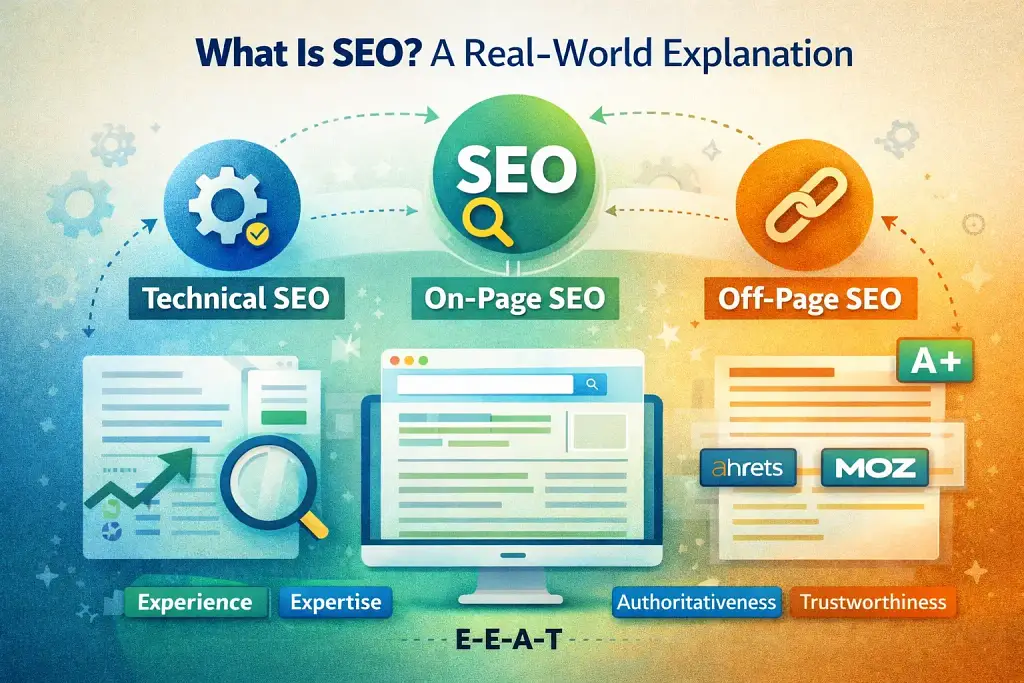
How SEO Works in 2026
When someone types a query into Google, the search engine shows results it considers most relevant and trustworthy for that specific query. SEO is the process of convincing Google that your pages deserve those top positions.
Modern SEO operates across three main pillars. The first is technical SEO. This covers site speed, mobile responsiveness, crawlability, and indexation. Google’s Core Web Vitals are now a confirmed ranking factor, meaning slow or poorly structured sites face a measurable disadvantage.
The second pillar is on-page SEO. This involves optimising your page content, title tags, meta descriptions, headings, internal linking structure, and the overall quality of information you provide to users.
The third pillar is off-page SEO. This is primarily about earning backlinks. When other authoritative websites link to yours, Google treats it as a vote of confidence. The more credible the linking site, the more value that link passes to your rankings.
How Google Evaluates Pages in 2026
Google uses over 200 ranking factors. But the consistent signals that have remained important across every algorithm update are clear: fast-loading pages, mobile-first design, genuinely helpful content, authoritative backlinks from relevant sources, and a trustworthy brand presence across the web.
Google’s AI systems, including the Helpful Content system and the core quality raters guidelines, now evaluate whether content actually helps the user accomplish their goal. Thin, keyword-stuffed pages that once ranked easily now struggle. Comprehensive, expert-driven content that demonstrates real knowledge and authority performs best.
The Real Advantages of Investing in SEO
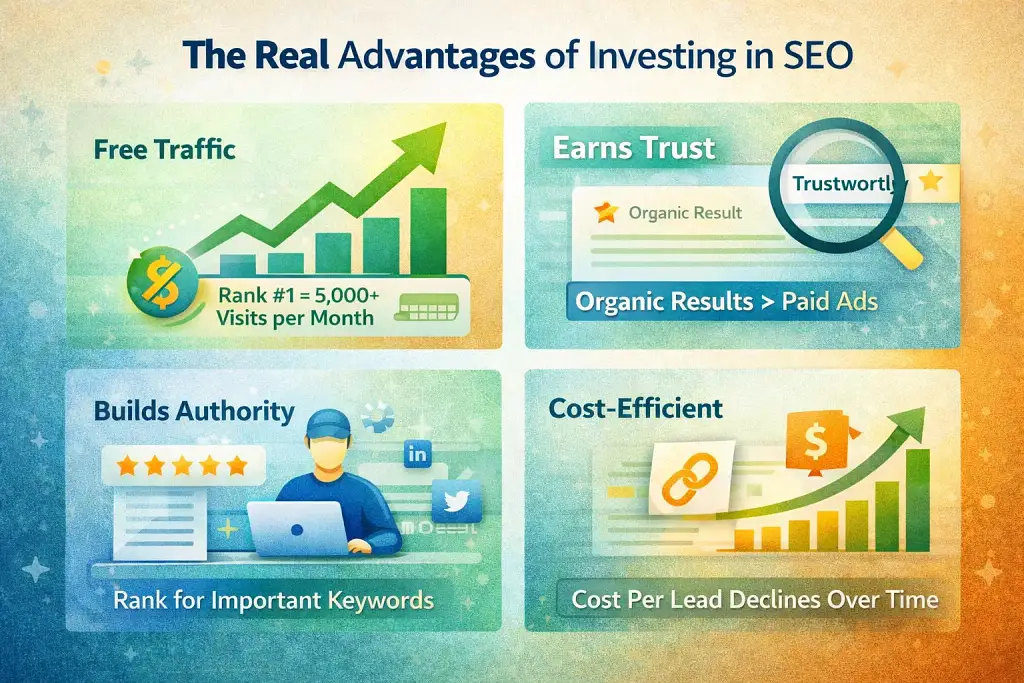
- Traffic costs nothing per click once you rank: After the initial investment in content creation and link building, organic clicks are free. A page that ranks for a high-volume keyword generates traffic without ongoing media spend.
- Organic results earn significantly more trust from users: Multiple studies consistently show that users trust organic results more than paid advertisements. Click-through rates for organic positions are higher than equivalent paid positions for many query types.
- SEO builds long-term brand authority: Ranking consistently for important keywords in your industry makes your brand appear credible and established. This authority carries value beyond the direct traffic it generates.
- ROI improves dramatically over time: The cost of maintaining a ranked page decreases as time passes. Content written today can generate leads and revenue for years. Google Ads require continuous spending to maintain the same traffic levels.
- High-intent visitors convert better: Users who find you through organic search are actively looking for solutions. This intent makes them more likely to engage seriously with your content and convert into customers.
The Honest Disadvantages of SEO
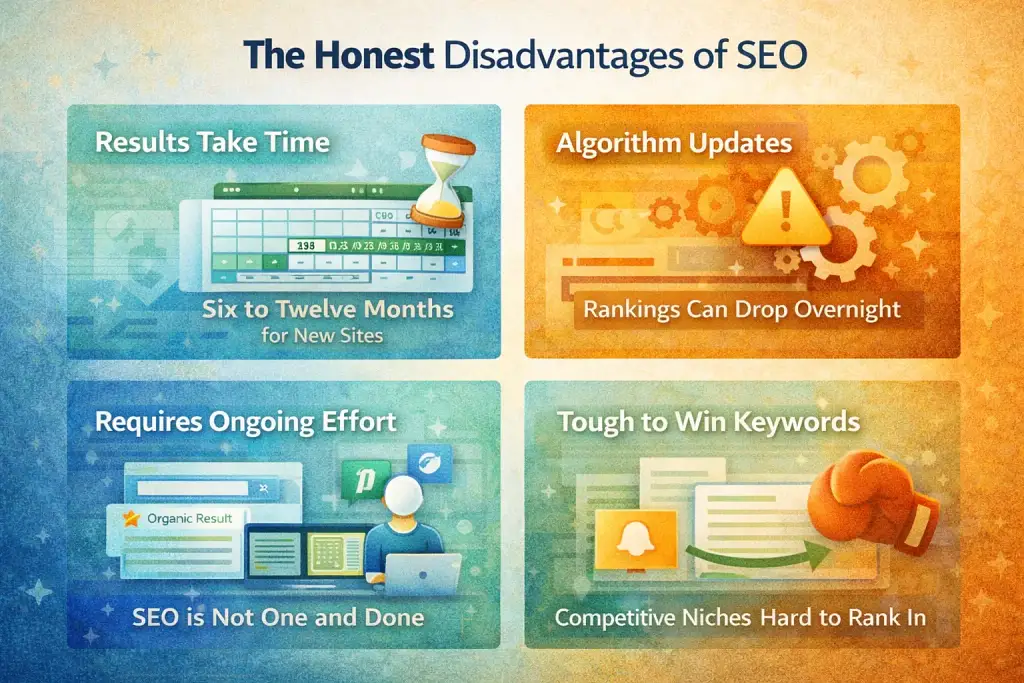
- Results take 6 to 12 months minimum: SEO is not a short-term strategy. New websites and new content typically require six months to a year before ranking for competitive keywords. Businesses that need immediate revenue cannot rely on SEO alone.
- Algorithm updates can impact rankings unexpectedly: Google makes thousands of algorithm changes each year. Major updates can significantly shift rankings. Businesses that depend entirely on organic traffic are exposed to this volatility.
- Requires ongoing investment and effort: SEO is not a set-and-forget activity. Content needs updating, links need building, and technical issues need monitoring. The moment you stop investing, competitors can overtake your positions.
- Competitive niches are genuinely difficult to crack: Industries like insurance, finance, legal services, and health are dominated by sites with enormous content libraries and millions of backlinks. Breaking into the top ten positions in these niches requires substantial time and resources.
What Are Google Ads? A Complete Overview
Google Ads is the paid search advertising platform that places your business at the top of Google’s search results immediately. You pay each time someone clicks your advertisement. You get instant visibility from the moment your campaign goes live.
For businesses that need leads, sales, or traffic right now, Google Ads provides what SEO cannot: speed. There is no waiting period, no authority building phase, and no content strategy requirement. If you have a budget and a well-configured campaign, your ads can appear above organic results today.
How Google Ads Work in Practice
Google Ads operates on a pay-per-click model. You select the keywords you want to target, set a maximum bid for each click, write your advertisement copy, and define your target audience. Google then enters your ad into an auction every time someone searches for one of your chosen keywords.
Ad Rank determines where your advertisement appears on the page. Ad Rank is calculated using your bid amount, your Quality Score, and the expected impact of your ad extensions. Quality Score reflects the relevance of your ad, the quality of your landing page, and your historical click-through rate. Higher Quality Scores allow you to achieve better positions at lower costs.
The final cost per click you pay is determined by the auction. You pay one cent more than the advertiser ranked directly below you, not your maximum bid. This means a highly relevant ad with a strong Quality Score can outperform a competitor’s higher bid while costing less per click.
The Genuine Advantages of Google Ads
- Instant visibility at the top of search results: Unlike SEO, Google Ads delivers immediate placement above organic results. A new business can appear at position one for its target keywords on the same day it launches a campaign.
- Extremely precise audience targeting: Google Ads allows targeting by keyword, geographic location, device type, time of day, audience demographics, and remarketing lists. This precision is impossible to replicate with organic search.
- Completely measurable results at every stage: Every click, impression, conversion, and cost is tracked in full detail. You can calculate your exact cost per acquisition, identify which keywords generate the highest return, and make data-driven budget decisions.
- Easy to scale when campaigns perform well: When a campaign is profitable, scaling simply means increasing budget. You can double or triple your spend and receive proportionally more traffic and conversions without rebuilding your strategy.
- Full control over spend and targeting at all times: You can pause campaigns instantly, adjust bids in real time, exclude irrelevant audiences, and shift budget between campaigns based on performance. SEO does not offer this level of control.
The Real Disadvantages of Google Ads
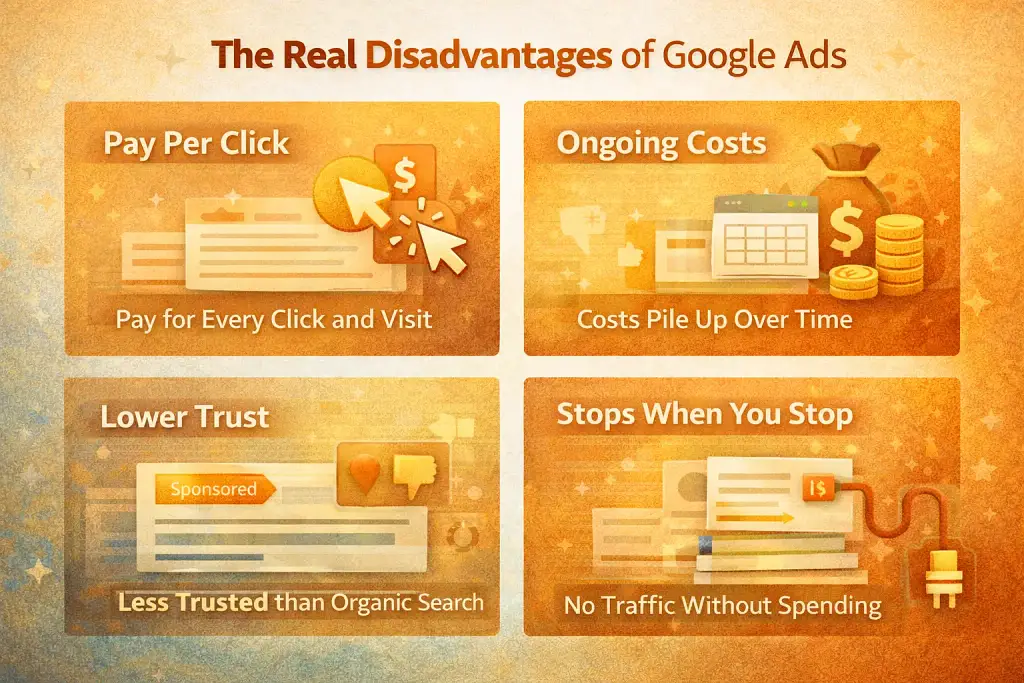
- Traffic stops immediately when your budget runs out: The moment you pause a Google Ads campaign, your visibility disappears entirely. There is no residual traffic from previous spend, no compounding effect, and no lasting presence in search results.
- Costs increase substantially in competitive niches: Popular keywords in high-value industries can cost tens or even hundreds of dollars per click. As more advertisers compete for the same keywords, costs rise and margins shrink.
- Ad blindness is a growing problem: Many experienced internet users have trained themselves to skip advertisements instinctively. Studies show click-through rates for paid ads are declining as users become more search-savvy.
- Requires significant expertise to run profitably: A poorly configured Google Ads campaign can burn through budget rapidly without generating meaningful results. Proper keyword selection, bid strategy, audience targeting, and landing page optimisation all require expertise and experience.
SEO vs Google Ads: A Direct Comparison Across Key Factors
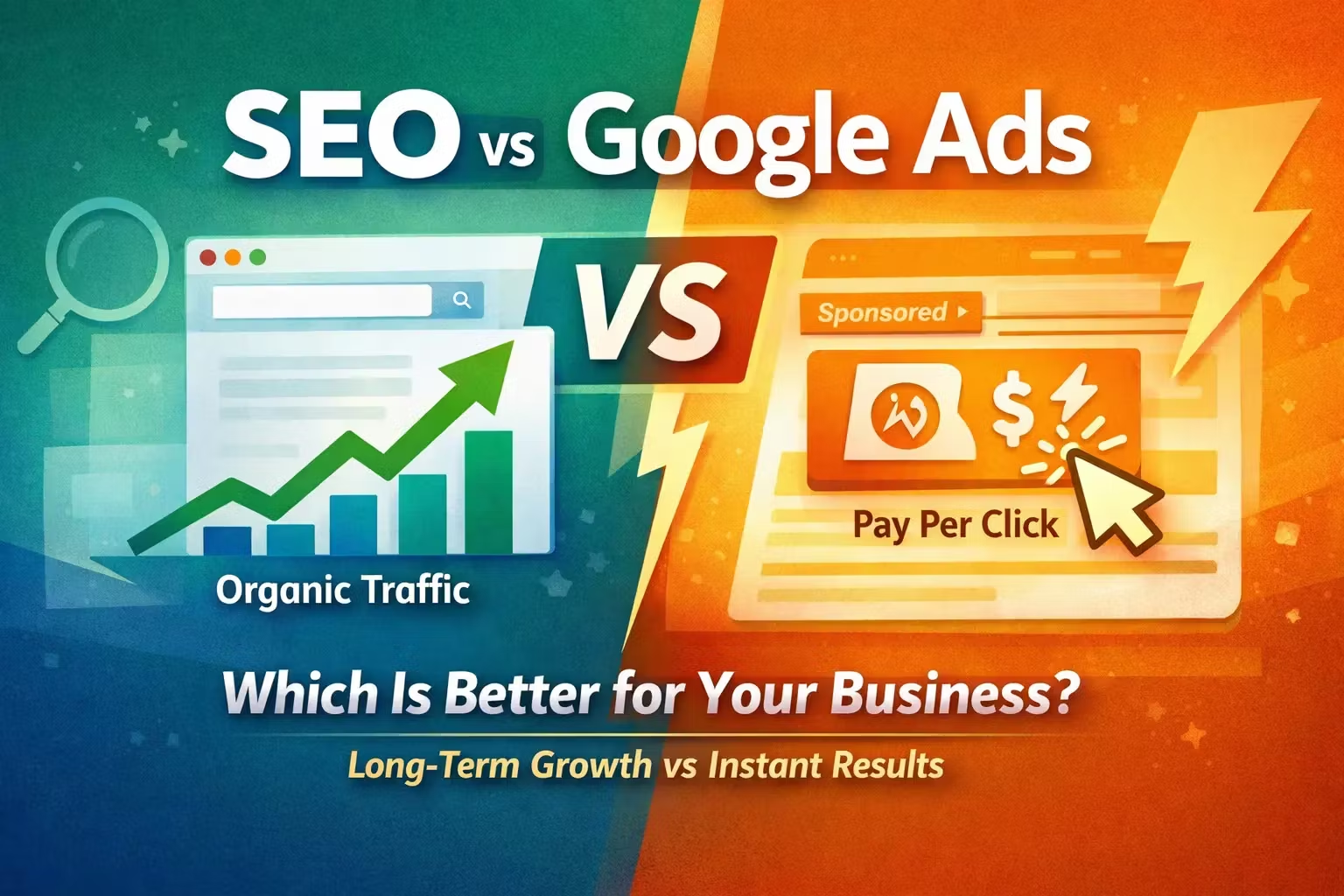
| Factor | SEO | Google Ads |
|---|---|---|
| Time to Results | 6–12 months minimum | Instant — same day |
| Cost Per Click | No cost per click once ranked | Pay for every click received |
| User Trust Level | High — users trust organic results | Lower — users identify ads |
| Scalability Speed | Slow — requires time to build | Fast — increase budget immediately |
| Traffic Longevity | Long-term — persists after work stops | Stops instantly when budget ends |
| Targeting Precision | Limited to keyword and content matching | Precise — demographics, devices, times |
| Ongoing Cost | Content and link building investment | Continuous media spend required |
| Algorithm Risk | Rankings can drop with updates | Position controlled by budget and bids |
Understanding Search Intent: The Most Important Factor in Your Decision
The biggest mistake businesses make when choosing between SEO and Google Ads is ignoring search intent. Not all searches are equal. The type of information a user wants determines which channel will serve them better and convert more effectively.
Search intent falls into four categories:
- Informational intent: The user wants to learn something. Queries like “what is SEO” or “how does Google Ads work” indicate someone researching a topic. SEO performs best here because users trust organic results for information and rarely click paid ads for learning purposes.
- Navigational intent: The user wants to reach a specific website. They already know where they want to go. Paid ads add minimal value here since the user has a destination in mind.
- Commercial investigation intent: The user is comparing options before making a decision. Queries like “best SEO agency London” or “Rank Math vs Yoast” fall here. Both SEO and Google Ads can perform well for commercial investigation queries.
- Transactional intent: The user is ready to buy. Queries like “hire SEO consultant” or “Google Ads management pricing” signal high purchase intent. Google Ads performs exceptionally well here because the user is ready to act and the ad format matches their intent perfectly.
Which Channel Delivers Better ROI? A Realistic Assessment
The Long-Term ROI of SEO Investment
SEO builds slowly but compounds aggressively over time. In the early months, you invest in content creation, technical improvements, and link building while seeing minimal traffic return. This is the most difficult phase and where many businesses abandon their SEO strategy prematurely.
After six to twelve months, rankings begin to stabilize. Traffic starts growing. The cost per visitor begins declining as your investment amortizes across an increasing number of visits. By year two or three, a mature SEO strategy typically delivers traffic at a fraction of the equivalent Google Ads cost.
The compounding nature of SEO is its greatest financial advantage. A piece of content that ranks today continues generating value without additional spend. Internal links from new content strengthen older pages. Backlinks earned today increase the authority of your entire domain permanently.
The Short-Term ROI of Google Ads Campaigns
Google Ads delivers immediate ROI but requires consistent and ongoing financial investment. When campaigns are well-configured — with relevant keywords, tightly written ad copy, and high-converting landing pages — the return can be excellent from the first week.
The challenge is that Google Ads costs scale with competition. As more advertisers enter your keyword market, click costs rise. Campaigns that delivered strong ROI at launch may become marginally profitable or even unprofitable as the competitive landscape intensifies.
The lack of residual value is the fundamental financial weakness of Google Ads. Every click you have ever paid for disappears from your traffic the moment you pause spending. There is no asset accumulation, no authority building, and no compounding effect from previous campaigns.
Side-by-Side ROI Comparison
In the first three months, Google Ads typically delivers substantially better ROI for businesses that need immediate revenue. The ability to generate leads on day one provides a clear advantage over SEO during this period.
Between months six and twelve, the gap begins to close. Established SEO content starts generating consistent traffic, while Google Ads costs continue accumulating without building lasting value.
From year two onwards, SEO almost always delivers superior ROI for businesses in competitive markets. The cost per lead from organic traffic drops continuously as ranking content matures, while Google Ads costs remain constant or increase.
The business with the strongest long-term marketing position is typically the one that invests in SEO early, uses Google Ads to bridge the revenue gap during the SEO growth phase, and gradually shifts investment toward organic as rankings mature.
Which Specific Situations Favour Google Ads?
Your Business Is Brand New and Needs Immediate Customers
A new business has no domain authority, no backlinks, and no ranking content. Building these assets takes time that many startups simply cannot afford. Google Ads provides the visibility that new businesses need to survive while their SEO foundation develops.
You Are Running a Seasonal or Time-Limited Campaign
Holiday promotions, limited-time offers, product launches, and event-based marketing all have fixed windows. SEO cannot deliver meaningful results within these timeframes. Google Ads is the only viable option for capturing search demand during a specific, defined period.
You Need to Test a New Market or Product Quickly
Before investing months into an SEO strategy for a new product or market, Google Ads lets you validate demand efficiently. You can test keyword demand, measure conversion rates, and gather data about your target audience within days rather than months.
You Operate in a Service Category With Very High Customer Lifetime Value
When a single customer is worth thousands or tens of thousands of dollars, the economics of paid search become highly favourable even at high click costs. Legal firms, financial advisors, real estate agencies, and B2B services often find that Google Ads delivers strong returns despite expensive keyword auctions.
You Are Targeting Highly Transactional Keywords in Your Niche
When users search with obvious purchase intent — “buy,” “hire,” “pricing,” “near me” — Google Ads captures this intent at exactly the right moment. These high-commercial queries convert at rates that justify significant click costs for most businesses.
Which Specific Situations Favour SEO?
Your Marketing Budget Is Limited and You Need Long-Term Efficiency
For businesses without large advertising budgets, SEO offers the best return on limited investment over a multi-year horizon. Creating one comprehensive piece of content that ranks for a high-volume keyword can generate more leads annually than an equivalent Google Ads spend.
You Are Building a Content-Driven Business or Media Brand
Blogs, media publications, online education platforms, and SaaS businesses with long content libraries benefit enormously from SEO. Each piece of content adds to a compounding traffic asset that grows in value over time.
Your Target Keywords Have Extremely High Cost-Per-Click Rates
In some industries, Google Ads costs are prohibitively expensive. Insurance, loans, legal services, and accounting keywords can cost $50 to $200 per click. For businesses in these categories, ranking organically for these same keywords delivers traffic at a fraction of the equivalent advertising cost.
You Want to Build Brand Authority and Trust in Your Industry
Consistent organic rankings across a topic area signal expertise and authority to both search engines and potential customers. A company that appears organically in the top three results for dozens of relevant keywords is perceived as an industry leader in ways that paid advertising cannot replicate.
You Have the Patience and Resources to Play the Long Game
Businesses that can sustain SEO investment through the initial six to twelve months of limited return are positioned to build a dominant market presence that competitors cannot easily displace. The barrier to entry for well-established organic rankings is high — which makes them extremely valuable once achieved.
How to Allocate Your Marketing Budget Between SEO and Google Ads
The optimal budget allocation depends entirely on your business stage, competitive landscape, and revenue requirements. These frameworks provide practical starting points:
For New Businesses (0 to 12 Months Old)
Allocate approximately 70% of your digital marketing budget to Google Ads and 30% to SEO foundation work. Use Google Ads to generate immediate revenue while simultaneously building the content and technical infrastructure your long-term SEO strategy requires. This prevents the cash flow problems that kill early-stage businesses while planting seeds for future organic growth.
For Growing Businesses (1 to 3 Years Old)
Move toward a 50/50 split as your SEO starts generating meaningful traffic. Your organic rankings should be producing leads that reduce your dependency on Google Ads. This transition period allows you to reinvest some of your advertising savings into accelerated content production and link building.
For Established Businesses (3 or More Years Old)
Shift toward 70% SEO and 30% Google Ads for most business types. Use Google Ads strategically for highly transactional keywords, competitive gaps in your organic coverage, and seasonal campaigns. Rely on your established organic presence for the majority of your traffic and lead generation.
Industry-Specific Considerations: Which Channel Works Better in Your Market?
eCommerce and Retail
Both channels are essential for eCommerce. Google Shopping Ads deliver immediate product visibility for transactional queries. SEO through product page optimisation and category content drives lower-cost traffic at scale. The most successful eCommerce businesses use Google Ads for new product launches and seasonal promotions while SEO handles evergreen product category traffic.
Local Services and Trades
Google Ads works exceptionally well for local service businesses — plumbers, electricians, cleaners, and similar trades — because customers typically have immediate, transactional needs. Local SEO through Google Business Profile optimisation and local content is equally important for building long-term visibility in local search results.
B2B and Professional Services
B2B buyers conduct extensive research before making decisions. SEO content that addresses their questions at every stage of the buying process builds trust and generates qualified leads over time. Google Ads can accelerate awareness for specific offerings or events but rarely drives the full B2B sales cycle independently.
SaaS and Technology
Content-driven SEO is the dominant growth strategy for successful SaaS companies. Building comprehensive resource libraries that rank for industry keywords generates consistent trial sign-ups and demo requests at low marginal cost. Google Ads supplements this for competitive keywords and retargeting campaigns.
Common Mistakes to Avoid With Both Channels
Critical SEO Mistakes That Damage Long-Term Results
- Expecting fast results from a slow-building channel: Businesses that abandon SEO after three months because they haven’t seen results are leaving enormous potential value unrealised. Understand the timeline before committing and have patience to see it through.
- Publishing low-quality, thin content at high volume: Quantity without quality actively harms SEO performance. Google’s Helpful Content system penalises sites that publish large volumes of content that doesn’t genuinely help users. One exceptional article outperforms ten mediocre ones.
- Ignoring technical SEO fundamentals: Even the best content will underperform if your site loads slowly, has crawling issues, or contains duplicate content problems. Technical SEO is the foundation that everything else sits on.
- Purchasing low-quality backlinks from link farms: Artificial link schemes can trigger manual penalties that remove your site from search results entirely. Building links legitimately through content creation and genuine outreach is the only safe approach.
Critical Google Ads Mistakes That Waste Budget
- Running campaigns without conversion tracking in place: If you cannot measure which clicks become customers, you cannot optimise your campaigns or calculate your actual return on investment. Set up conversion tracking before spending a single dollar.
- Targeting overly broad keywords without negative keyword lists: Broad keyword matching without negative keywords causes your ads to appear for irrelevant searches. You pay for clicks from users who have no interest in your product, wasting budget and inflating your cost per acquisition.
- Sending all traffic to your homepage instead of dedicated landing pages: Homepage traffic from paid ads converts at a fraction of the rate of dedicated landing pages. Build specific landing pages that match the intent of each keyword cluster in your campaign.
- Scaling ad spend before validating campaign profitability: Increasing budget on an unprofitable campaign multiplies losses, not gains. Prove your campaign generates positive ROI at a small scale before scaling aggressively.
The Integrated Strategy: Using SEO and Google Ads Together for Maximum Impact
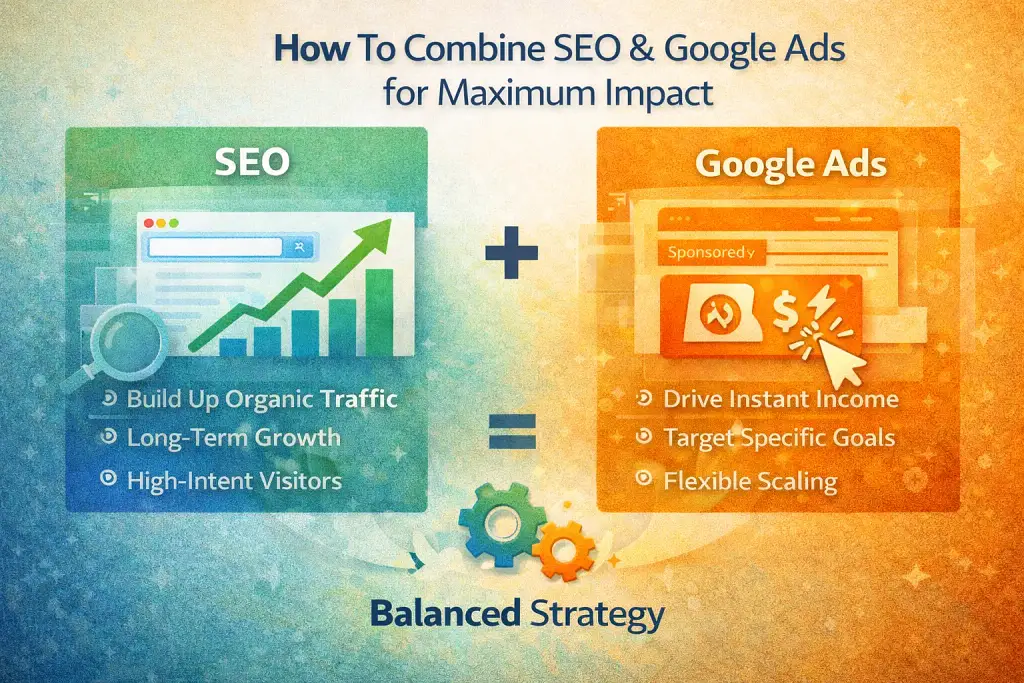
The most successful digital marketing strategies do not choose between SEO and Google Ads. They use both channels strategically, allowing each to compensate for the other’s weaknesses while amplifying their respective strengths.
Google Ads data provides invaluable keyword intelligence for your SEO strategy. The keywords that generate the highest conversion rates in your paid campaigns are exactly the ones worth targeting with SEO content. You get real conversion data before investing months into organic content development.
SEO content supports Google Ads performance through improved Quality Scores. When your landing pages are genuinely helpful and relevant — as good SEO content demands — your Quality Scores improve, your cost per click decreases, and your ad positions strengthen.
Remarketing through Google Ads recaptures organic visitors who did not convert on their first visit. A user who found your site through organic search and spent time reading your content is a warm prospect. Remarketing ads can bring them back at the moment they are ready to convert.
Dominating both organic and paid positions for the same keyword provides a compounding visibility advantage. When users see your organic result and your paid ad simultaneously, brand recognition and click-through rates increase substantially compared to appearing in only one position.
Final Verdict: Which Is Better for Your Business?
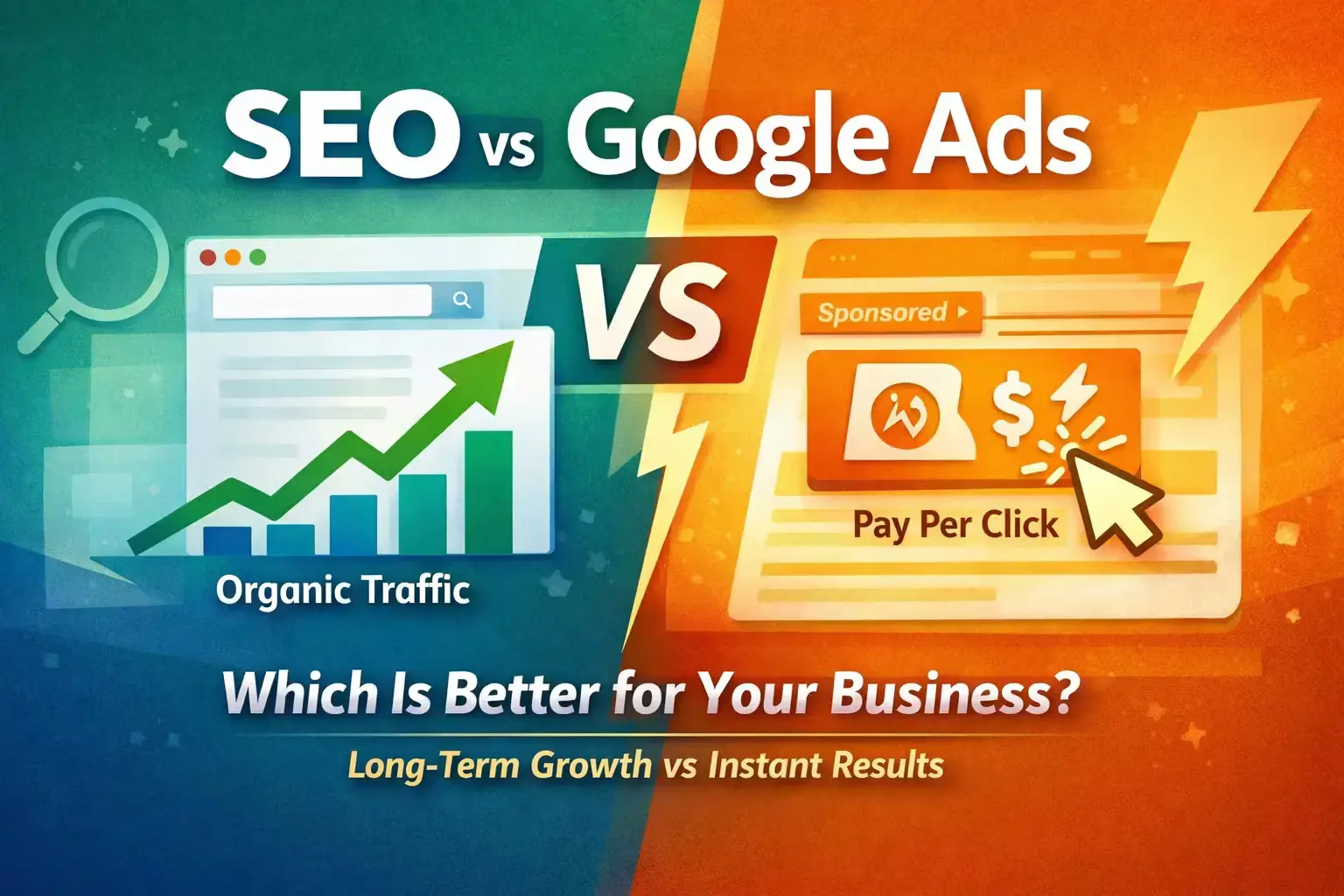
There is no universally correct answer to the SEO versus Google Ads debate. The right channel depends on your specific situation, and the best strategy almost always involves both.
If you need customers immediately and have budget available, start with Google Ads while simultaneously building your SEO foundation. The short-term revenue Google Ads generates can fund the content creation and link building your long-term SEO strategy requires.
If you are building a business for the long term and can sustain an investment period of six to twelve months without immediate returns from your marketing spend, prioritise SEO. The compounding returns it generates are unmatched by any paid channel over a multi-year horizon.
If you are an established business with existing organic traffic and a proven Google Ads strategy, optimise both channels in parallel. Use data from each to improve the other, shift budget toward whichever delivers superior returns at each stage of your growth, and build a marketing presence that competitors cannot easily displace.
The businesses that win in search are not the ones that choose the right channel. They are the ones that execute both channels exceptionally well and understand how to make them work together.