
Static vs Dynamic Websites: Which One Should You Choose?
Choosing the right type of website is one of the most important decisions when building an online presence. The choice between static and dynamic websites affects performance, scalability, cost, and user experience.
This guide explains both approaches in detail so you can decide which one is right for your business.
What Is a Static Website?
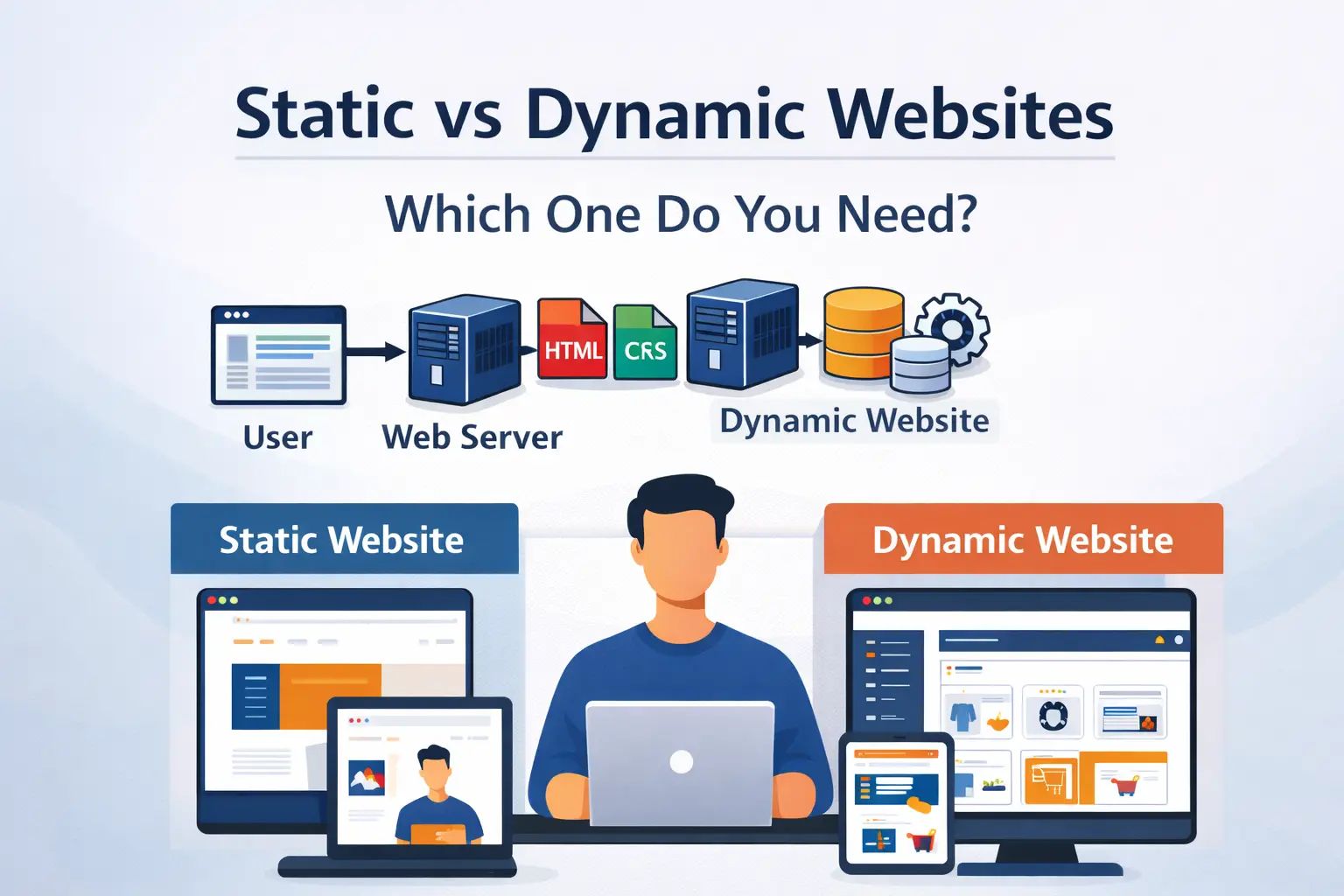
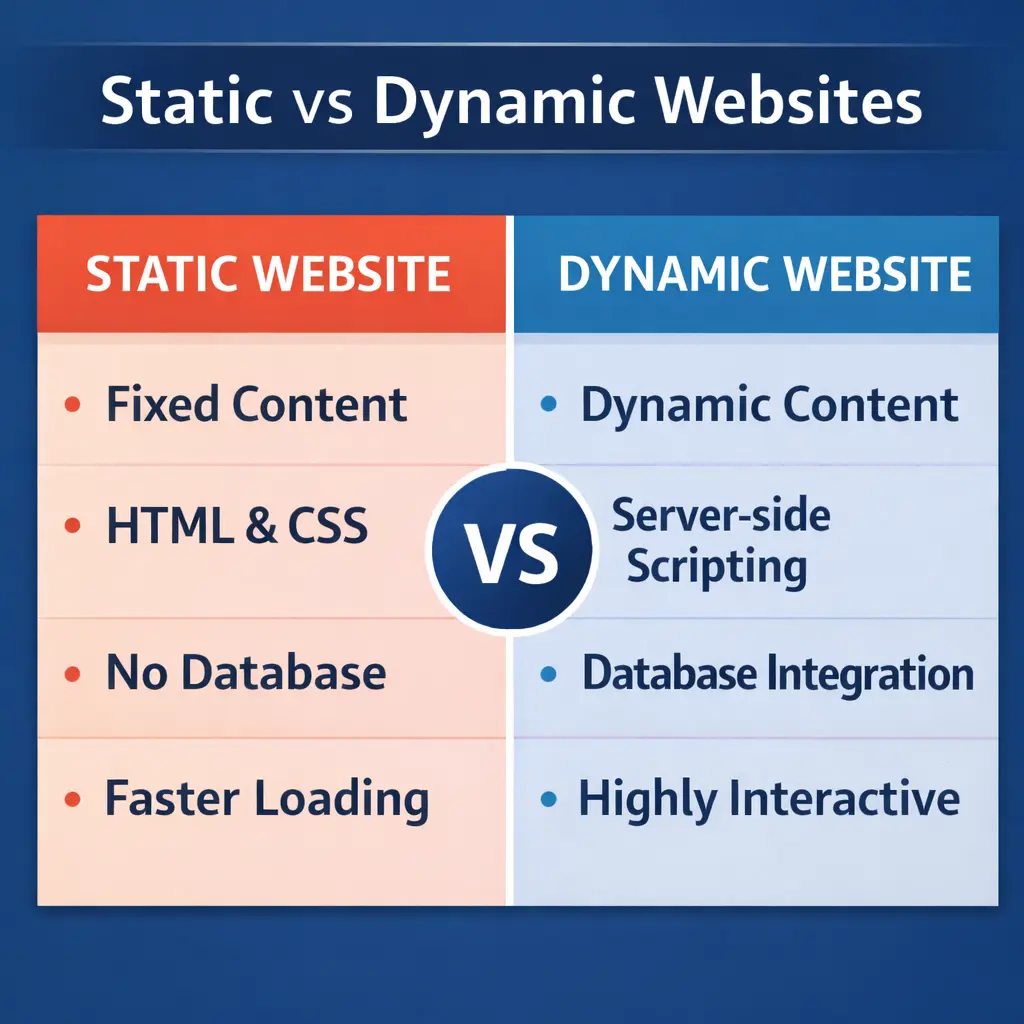
A static website delivers pre-built HTML pages to users. Every visitor sees the same content.
Static websites are simple and fast because the server does not need to process any data before sending the page. The files are stored on a server and delivered directly to the browser without any server-side processing.
Static websites are typically built using plain HTML, CSS, and JavaScript or with the help of static site generators like Jekyll, Hugo, or Gatsby.
Key Benefits of Static Websites
- Extremely fast loading speed
- High security with minimal attack surface
- Low hosting costs
- Simple to deploy and maintain
- Reliable uptime and performance
- Easy to version control
Limitations of Static Websites
- Manual updates required for every change
- No personalization for individual users
- Limited scalability for large or complex projects
- No real-time features without third-party services
- Not suitable for user-generated content
How Static Websites Work
Static websites store pre-built files directly on the server. When a user requests a page, the server delivers the file as-is without any processing. This means every visitor receives the exact same page content.
The simplicity of this model is why static websites are so fast and reliable.
What Is a Dynamic Website?
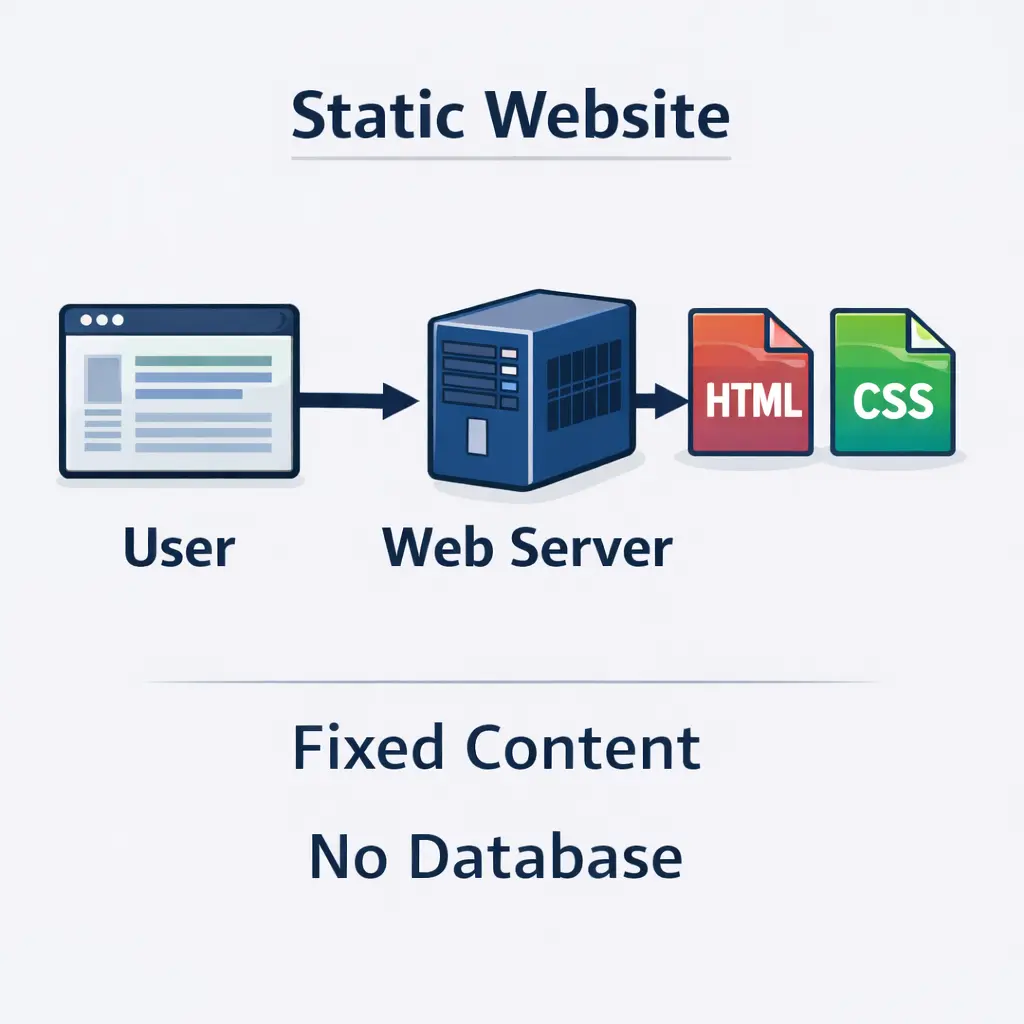
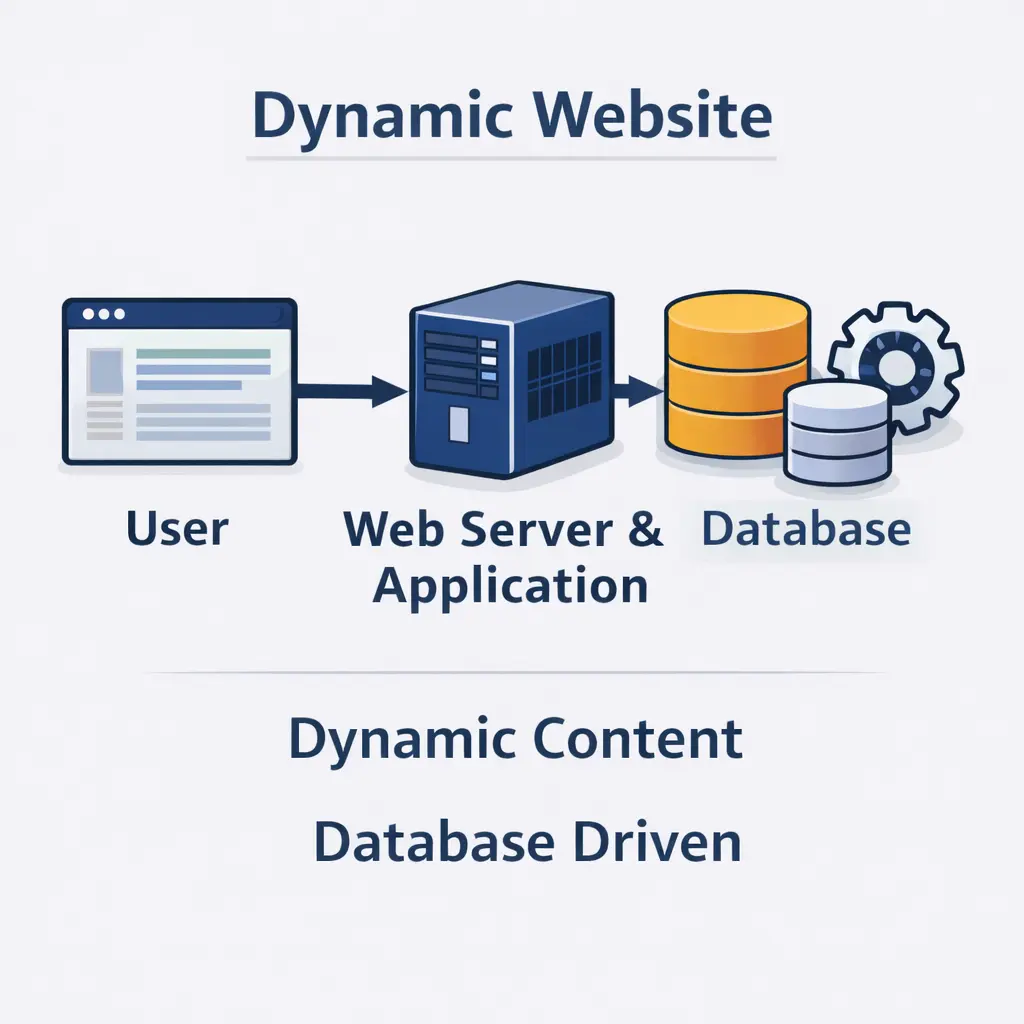
A dynamic website generates content in real time based on user interactions, database queries, or backend logic.
Each visitor can see different content depending on their behavior, location, login status, or preferences. Dynamic websites use server-side languages like PHP, Python, or Node.js combined with databases to build pages on demand.
Popular content management systems like WordPress, Drupal, and Joomla are examples of dynamic website platforms.
Key Benefits of Dynamic Websites
- Personalized user experience for each visitor
- Easy content management with a CMS
- Supports complex functionality like e-commerce
- Scalable for large applications and high traffic
- Supports user authentication and accounts
- Real-time content updates
Limitations of Dynamic Websites
- Slower than static websites due to server processing
- Higher hosting costs
- More complex maintenance and updates
- Greater security risks and vulnerabilities
- Requires database management
Static vs Dynamic: Key Differences
| Feature | Static | Dynamic |
|---|---|---|
| Speed | Very fast | Moderate |
| Security | High | Lower |
| Cost | Low | Higher |
| Flexibility | Limited | High |
| Scalability | Limited | High |
| Maintenance | Simple | Complex |
| Personalization | None | Full |
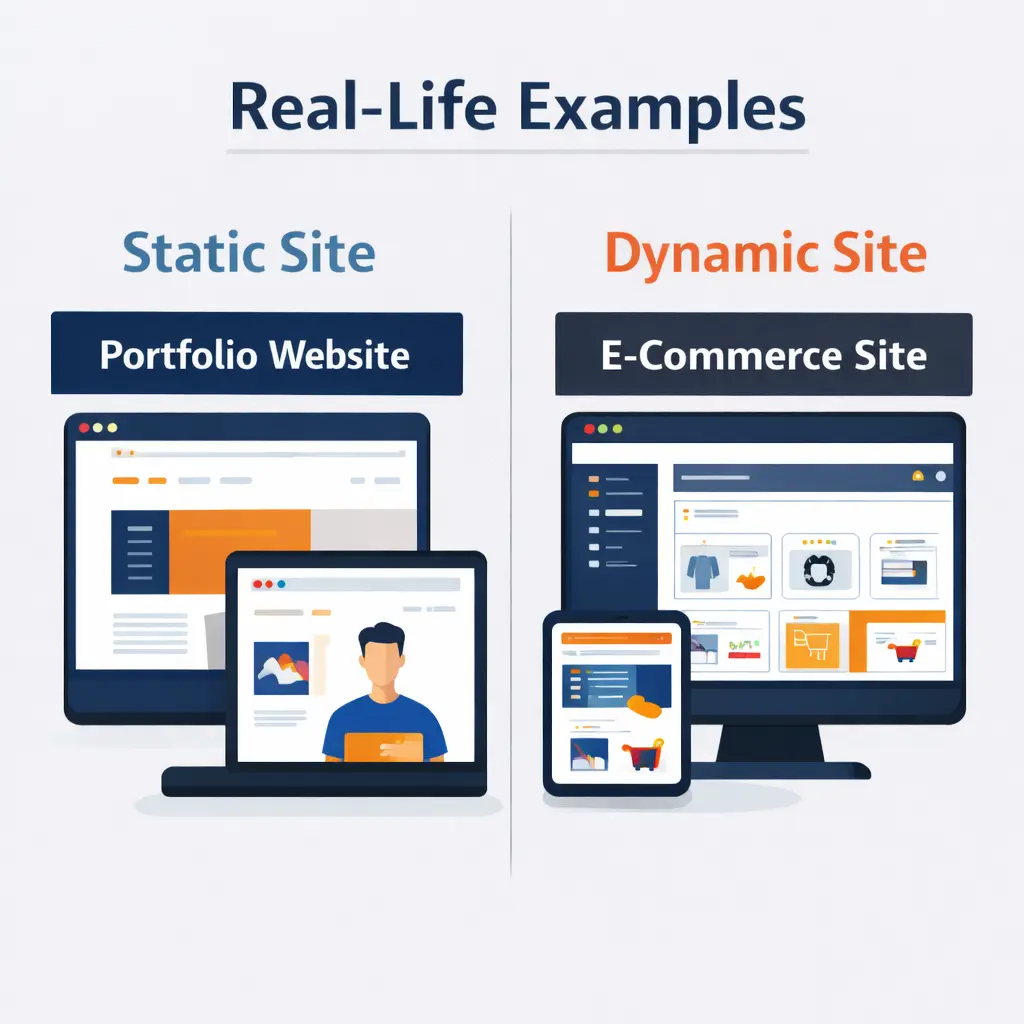
Types of Static Websites
- Portfolio websites
- Landing pages
- Documentation websites
- Blog websites built with static generators
- Brochure websites
Types of Dynamic Websites
- E-commerce stores
- Social media platforms
- News and media websites
- Web applications
- Membership and subscription websites
Technology and Tools Used
Static Website Tools
- HTML, CSS, JavaScript
- Jekyll
- Hugo
- Gatsby
- Next.js (static export)
Dynamic Website Tools
- WordPress
- PHP, Python, Ruby, Node.js
- MySQL, PostgreSQL, MongoDB
- Laravel, Django, Express.js
- Drupal, Joomla
.webp)
Which Type Ranks Better?
Both static and dynamic websites can rank well in search engines. However, static websites have a speed advantage which is an important ranking factor.
Google's Core Web Vitals favor fast-loading pages. Static websites often score higher on performance benchmarks because there is no server-side processing delay.
Dynamic websites can compete in SEO with proper optimization, caching, and performance improvements.
Security: How Are They Different?
Static websites are inherently more secure because they have no database, no server-side code, and fewer attack vectors. There is no risk of SQL injection or server-side exploits.
Dynamic websites are more vulnerable due to their reliance on databases, plugins, and server-side code. They require regular updates, security patches, and monitoring to stay secure.
Which One Should You Choose?
Choose Static If:
- Your content rarely changes
- You need maximum speed and performance
- Your budget is limited
- You do not need user accounts or logins
- Security is a top priority
- You are building a portfolio or brochure site
Choose Dynamic If:
- You need user authentication and accounts
- You update content frequently
- You need real-time features and interactions
- You are building complex web applications
- You need e-commerce functionality
- You require a CMS for non-technical editors
Can You Combine Both?
Yes. Many modern websites use a hybrid approach called the Jamstack architecture. This combines the speed of static sites with the flexibility of dynamic features delivered via APIs and JavaScript.
This approach gives you the best of both worlds: fast, secure static pages with dynamic content loaded where needed.
Conclusion
Static websites are best for speed, simplicity, and cost efficiency. Dynamic websites are better for flexibility, scalability, and advanced functionality.
The right choice depends on your project requirements, content update frequency, and long-term goals. Evaluate your needs carefully before deciding which approach is best for your online presence.